Big Think
@bigthink·8.8M subscribers·10.1K videos
Big Think Interview With Ottavio Arancio | Big Think
Posted
April 24, 2012
Views
1,244
Likes
10
Engagement
0.80%
April 24, 2012
1,244
10
0.80%
Every word spoken in this episode is indexed. Type any phrase to jump straight to the moment it was said.
Type any word or phrase that may have been spoken. Click a result to seek the player to that exact moment.
Try a name, a topic, or a quoted line
 27:26Now Playing
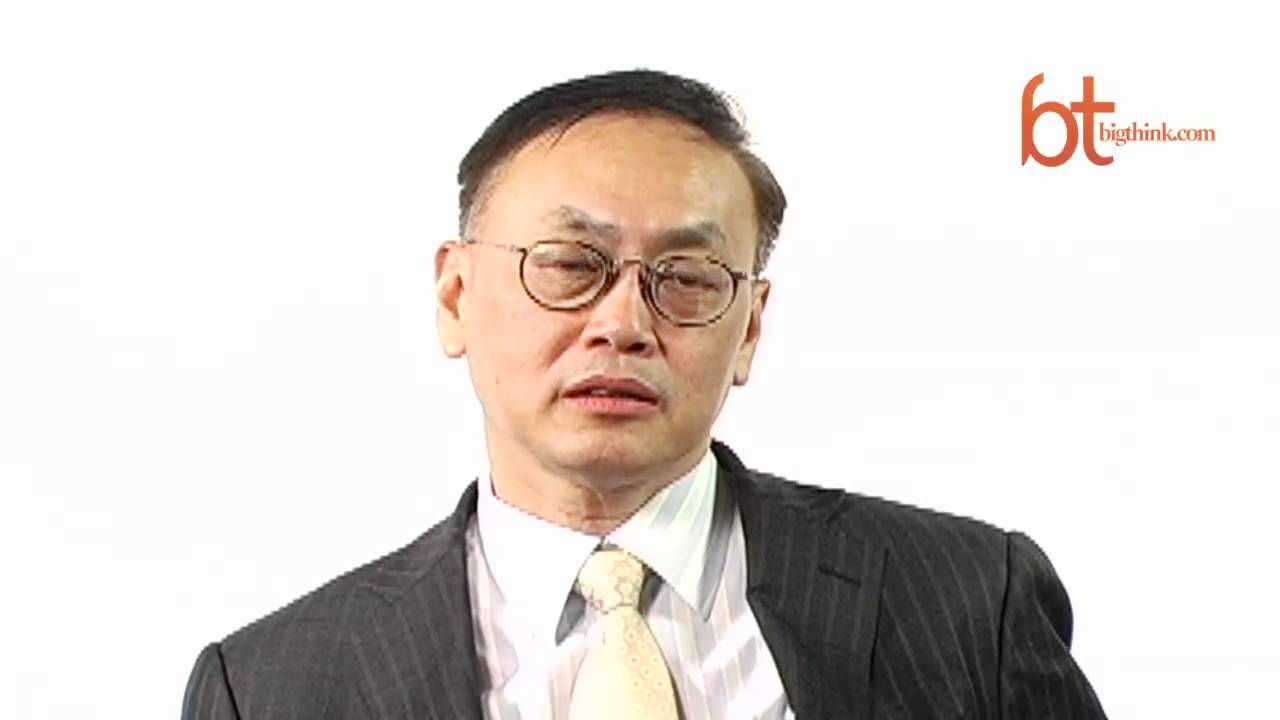
Big Think Interview With Ottavio Arancio
New videos DAILY
Join Big Think Edge for exclusive videos
----------------------------------------------------------------------------------
A conversation with the professor at the Taub Institute for Research in Alzheimer’s Disease and the Aging Brain at Columbia University.
----------------------------------------------------------------------------------
Ottavio Arancio:
Ottavio Arancio is Associate Professor of Pathology & Cell Biology at the Columbia University Medical Center. He received his Ph.D and M.D. from the University of Pisa in Italy. Dr. Arancio has held Faculty appointments at Columbia University, NYU School of Medicine, and at SUNY HSCB. In 2004 he became Faculty member of the Department of Pathology and Taub Institute for Research on Alzheimer’s Disease and the Aging Brain at Columbia University. His honors include the G. Moruzzi Fellowship (Georgetown University), the Anna Villa Rusconi Foundation Prize (Italy), and the INSERM Poste vert Fellowship (France).
Dr Arancio is a cellular neurobiologist who has contributed to the characterization of the mechanisms of learning in both normal conditions and during neurodegenerative diseases. During the past decade he has pioneered the field of mechanisms of synaptic dysfunction in Alzheimer’s disease. Dr. Arancio’s laboratory has focused primarily on events triggered by amyloid protein. These studies, which have suggested new links between synaptic dysfunction and amyloid protein, are of a general relevance to the field of Alzheimer’s disease both for understanding the etiopathogenesis of the disease and for developing therapies aiming to improve the cognitive symptoms.
----------------------------------------------------------------------------------
TRANSCRIPT:
Question: Can you describe your research into Alzheimer’s disease?
Ottavio Arancio: rnOkay, the overall goal of the research in my lab is to find a therapyrnagainst the Alzheimer’s disease. rnThat’s a very general way of saying things and to be more specific wernare… we have different strategies in the lab to go to achieve this goal, so wernare trying to approach it from different perspectives and if I have tornsummarize these perspectives in a few words I should say that in one kind ofrnstudies we are trying to understand what is the function of a molecule that isrncalled beta amyloid and this is a molecule made by many amino acids. Once there are many amino acidsrntogether those molecules are called peptides. Anyway, this beta amyloid, which is produced in a very highrnamount in the brain of people with this disease and is known also to be veryrntoxic to the communication of the cells in the brain and therefore to lead tornmemory impairment, so but we know that this molecule is present in the brain ofrnpeople throughout life, just normal half the people and it is there in very lowrnamount and nobody knew what was the function, if at all to any function thisrnprotein in this very low amount. rnWhat most of scientists thought was that it was kind of piece of garbagernin the brain of people with no relevance whatsoever and instead we have startedrnworking on it and we have found that actually probably the very likely functionrnof this protein in very low amount is just to be there to lead to normalrnmemory, so without it we cannot store information in the brain, we cannot learnrnand there will not be normal memory.
So I mean with all the study what we think is that thisrnmolecule is there. It’s necessaryrnfor memory and then for some unknown reason we start making… people with the disease start making a lotrnof it and the fact there is a lot just makes opposite of what it does in thernnormal brain, so it’s actually it reduces memory when it is there in a veryrnhigh amount and so this is a very, very you know interesting characteristic andrnwe think that actually until the studies were not there what people were doingrnto understand the cause of the disease was just to look at the disease from thernvery end of it instead of trying to understand… You know it was a kind of a piece of a puzzle that isrnmissing to understand the… to understand how something which is there becomesrnwhat is the beginning of the end for memory. So in other words just to make things more simple becausernotherwise we get lost here is that now we know that normal function of thisrnprotein in very low amount in the brain is to lead to memories, that thisrnmolecule is necessary for memory and that we now need to understand how thernproblem starts, how memory is impaired.
Read the full transcript at
Sentinel Indexing in Progress
Metadata and chapters are available. Claim extraction for this episode is pending.
All video content is delivered via YouTube embedded players in accordance with the YouTube Terms of Service. Sentinel provides research tools that promote discovery and accountability across political media.