Big Think
@bigthink·8.8M subscribers·10.1K videos
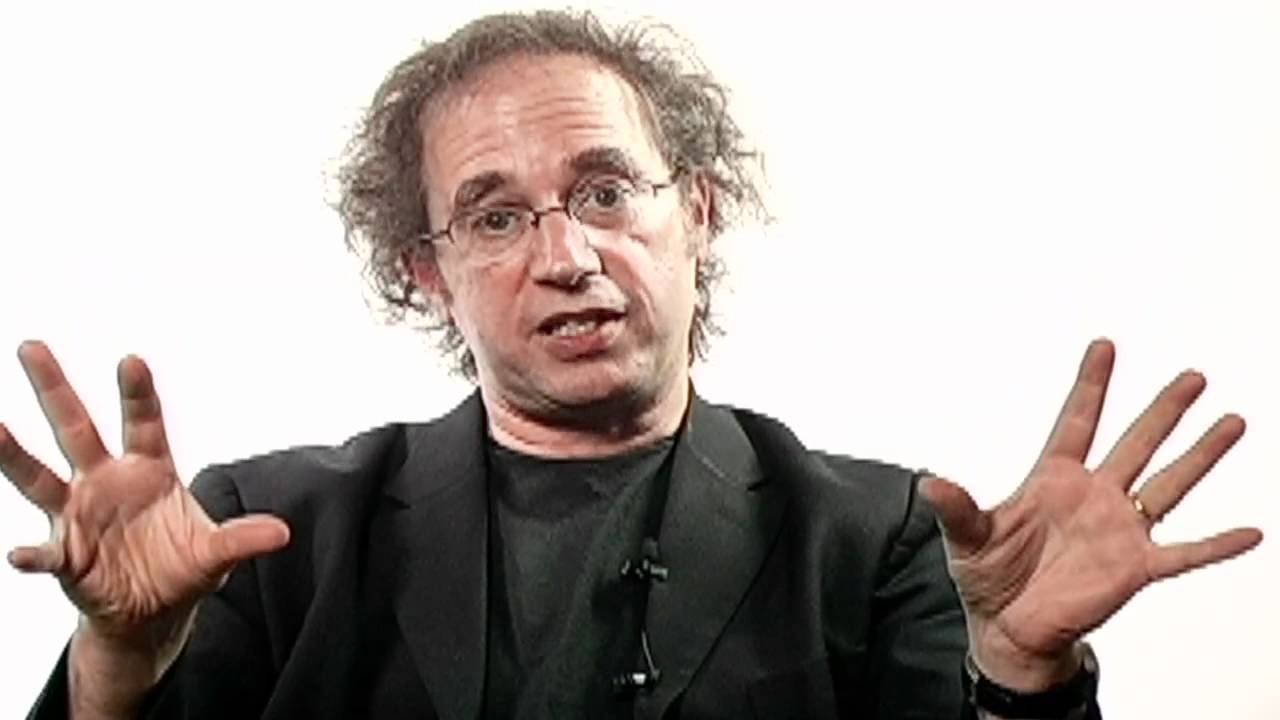
Big Think Interview with James Surowiecki | Big Think
Posted
April 24, 2012
Views
3,286
Likes
42
Comments
1
Engagement
1.31%
April 24, 2012
3,286
42
1
1.31%
Every word spoken in this episode is indexed. Type any phrase to jump straight to the moment it was said.
Type any word or phrase that may have been spoken. Click a result to seek the player to that exact moment.
Try a name, a topic, or a quoted line
You’re on April 24, 2012. Earlier episodes are to the left, later ones to the right — the row keeps loading as you go. Click any card to open it.
 Apr 24, 201259:14Now Playing
Big Think Interview with James Surowiecki
New videos DAILY
Join Big Think Edge for exclusive videos
----------------------------------------------------------------------------------
A conversation with the author of “The Wisdom of Crowds” and the business columnist for The New Yorker.
----------------------------------------------------------------------------------
James Surowiecki:
James Surowiecki has been a staff writer at The New Yorker since 2000. He writes The Financial Page. Surowiecki came to The New Yorker from Slate, where he wrote the Moneybox column. He has also been a contributing editor at Fortune and a staff writer at Talk. Previously, he was the business columnist for New York magazine. He has contributed to The Wall Street Journal, Wired, the New York Times Magazine, the Washington Post, and Lingua Franca, and has written on subjects ranging from Silicon Valley to college basketball. His book, “The Wisdom of Crowds: Why the Many Are Smarter than the Few and How Collective Wisdom Shapes Business, Economies, Societies, and Nations,” was published in 2004.
----------------------------------------------------------------------------------
TRANSCRIPT:
Question: What led to the insight that originally caused you to explore how crowds might actually have some wisdom?
James Surowiecki: Well, the story is actually kind of interesting in retrospect because what happened is when I first started writing about business in the mid-1990’s, I really didn’t have much experience thinking about, or writing about business and markets. And I was struck by the fact that a lot of times, although as we’ve seen recently, by no stretch of the imagination always, markets actually tend to often be smarter than most of the people in them. So, we know that over time, most investors, even very accomplished investors underperform the stock market and the like. And the traditional explanation for why this is, is if you looked at classic economics text books, they would talk about how investors are perfectly rational, they have perfect information, long-time horizons and the like. Well, that’s obviously not true at all. Investors are often very irrational; they act on very little pieces of information.
I was interested in how can you take all of these very, very imperfect, and very, very flawed individuals and collectively how can they arrive at reasonably good outcomes; not great outcomes, but reasonably good outcomes? And when I started looking at that, what I started coming across were a lot of examples that didn’t have anything to do with markets. Examples of groups, again and again being able to collectively solve problems or come up with answers that were actually better in some cases than the smartest person in the group. And that oftentimes were very, very complex. So, over time, what I started to realize, or decide, depending on what you think of my book, is that it wasn’t that there was something about markets that was especially magical, and actually, in some ways I think markets are one of the more imperfect examples of the wisdom of crowds, but that actually they were just a specific example of this bigger phenomenon that I ended up calling “The Wisdom of Crowds.”
So, the story that opens the book is the story of the British scientist, Francis Galton, who is sort of famous in terms of – he was one of the first people to really use statistical analysis to try to think about populations and individual behavior and things like that. But this particular story is; about a century ago, he was at this country fair in the west of England and as he was walking through the fair, he came across this contest. And the contest was that an ox had been placed on display and people were basically lined up to guess the weight of the ox. Now, actually what they were being asked to do was to guess the weight of the ox after it had been slaughtered and dressed, which was sort of unfortunate for the ox, but if you think about it, it complicated the task. It was a little more complicated than just guessing the weight of an ox as it stood there. And it was actually a big crowd. It was actually 700 people and there was a reward if you did well, you’d win a prize. So there was some incentive for people to do a good job of trying to guess the weight of this ox.
So, after the contest was over, Galton went up to the guys who had organized the contest and he said, “Can I have the slips?” Sort of testimony to his brilliance as a scientist that he realized this might be useful information. And then what he did was, he just did a series of statistical tests on them. So, he graphed them to see if they formed a bell curve, to see if the distribution was normal. He calculated the standard deviation, and then he did a couple of things.
Read the full transcript at
Sentinel Indexing in Progress
Metadata and chapters are available. Claim extraction for this episode is pending.
All video content is delivered via YouTube embedded players in accordance with the YouTube Terms of Service. Sentinel provides research tools that promote discovery and accountability across political media.