Big Think
@bigthink·8.8M subscribers·10.1K videos
Big Think Interview With Jon Hanson | Big Think
Posted
April 24, 2012
Views
1,385
Likes
24
Engagement
1.73%
April 24, 2012
1,385
24
1.73%
Every word spoken in this episode is indexed. Type any phrase to jump straight to the moment it was said.
Type any word or phrase that may have been spoken. Click a result to seek the player to that exact moment.
Try a name, a topic, or a quoted line
 29:39Now Playing
Big Think Interview With Jon Hanson
New videos DAILY
Join Big Think Edge for exclusive videos
----------------------------------------------------------------------------------
A discussion with the Harvard Law School professor and Director of the project on Law and Mind Sciences
----------------------------------------------------------------------------------
Jon Hanson:
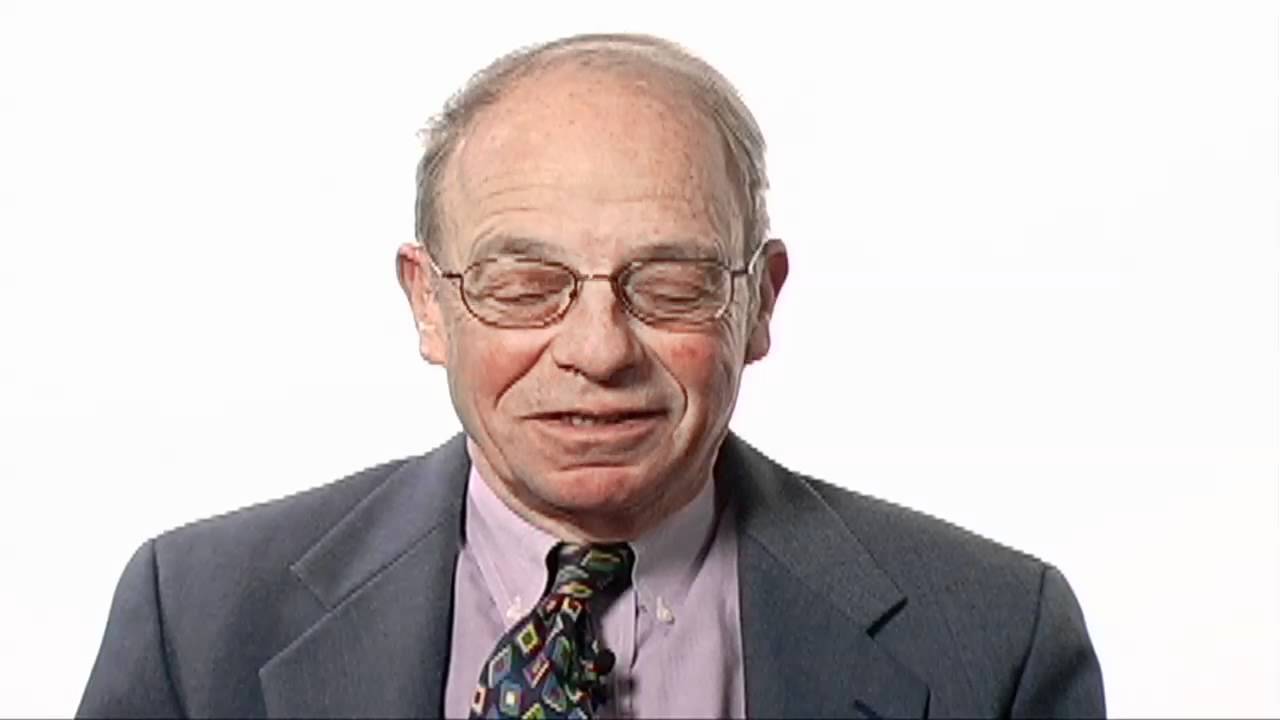
Jon Hanson is the Alfred Smart Professor of Law at Harvard Law School. He is the Director and co-creator of The Project on Law and Mind Sciences at Harvard Law School and co-creator of, and contributor to, The Situationist blog, which is a forum for identifying, examining, discussing, and debating, the effect of situational forces — that is, non-salient factors around and within us — on law, policy, politics, and legal theory, and on our social, political, and economic institutions.
----------------------------------------------------------------------------------
TRANSCRIPT:
Jon Hanson: Yeah, I’m Jon Hanson. I’m an Alfred Smart Professor of Law at Harvard Law School and Director of the project on Law and Mind Sciences.
Question: What is wrong with our legal system’s notion of human behavior?
Jon Hanson: So the legal system begins with a schema or a story or an understanding of what the human animal is and what moves people. And it is a very familiar story. It’s the same kind of scheme of the, it is common sensical that researchers have shown most Americans have about what moves us and that is a very simple kind of set of stable preferences that we have and we take those stable preferences and we use our ability to think and we gather information and we combine our thinking and our preferences, apply a little bit of our will and that leads to our choices, our action. So the simple model that is fundamental to that kind of classic liberalism fundamental to the legal system, fundamental to Law and Economics is that. I call that the Dispositionists Actor Model that individuals are moving, are being moved by their own preferences, their own disposition. You might call is a characterological model or an individualistic model, there are different names you might give it, I call it Dispositionist.
That view of the person turns out to be absolutely fundamental to every legal question that comes up because legal questions are focused on what happens when something goes wrong. Or what happens when something goes right. How are we going to split up what happened between the parties who are involved? And our answers to those questions turn on attributions we make about who played a more significant causal role, what were their motives, what were their intentions and so forth. In answering those questions and the view of the person carries much of the weight in terms of determining the answer.
So if we someone acting and behaving in a certain way and we conclude that that’s because of their preferences, and we conclude in term that as a consequence of their actions their fulfilling their preferences, then from a legal perspective our view is let’s not intervene. They’re pursuing their own welfare.
So if we see individuals eating a lot of food, cheeseburgers, milk shakes and French fries we say they must really like that food. And if they become obese we say that’s what you get you need you know for eating like that, you’ve got to change your behavior if you want to avoid that. What the Mind Sciences suggest is that this basic model of the human animal is fundamentally wrong. Which is not to say that people don’t have some agency; it’s not to say that people can’t make some choices based on something but it’s not based on a stable set of preferences to which we give normative weight and much of the behavior is influenced by forces within in that we’re not conscious of and around us. So that if you go back to that same person who is obese and you look at their situation, you begin to see its more than just an individual’s choices based on their proclivity for milk shakes. And if you want to understand an obesity epidemic, you’ve got to look outside of that simple model which again Mind Scientists have shown is incorrect and began looking at the situation.
From a law perspective, it’s not just a claim that, “gee, what you’re doing is wrong from and inaccurate,” it’s that if you care about problems such as the obesity epidemic or smoking, or name the problem that your focus on the dispositions on the individuals involved is not going to help you solve the problem. At most, it’s going to create an illusion that there is no problem because people chose it or the problem is solved because whoever the bad apple is, the bad actor is has been punished or fined, or put in prison.
Read the full transcript at
Sentinel Indexing in Progress
Metadata and chapters are available. Claim extraction for this episode is pending.
All video content is delivered via YouTube embedded players in accordance with the YouTube Terms of Service. Sentinel provides research tools that promote discovery and accountability across political media.