Big Think
@bigthink·8.8M subscribers·10.1K videos
Will Lifestreaming Become a Fact of Life? | David Gelernter | Big Think
Posted
April 24, 2012
Views
256
Likes
3
Engagement
1.17%
April 24, 2012
256
3
1.17%
Every word spoken in this episode is indexed. Type any phrase to jump straight to the moment it was said.
Type any word or phrase that may have been spoken. Click a result to seek the player to that exact moment.
Try a name, a topic, or a quoted line
 4:31Now Playing
Will Lifestreaming Become a Fact of Life?
New videos DAILY
Join Big Think Edge for exclusive videos
----------------------------------------------------------------------------------
The concept that David Gelernter defined in the 1990s is fast becoming universal.
----------------------------------------------------------------------------------
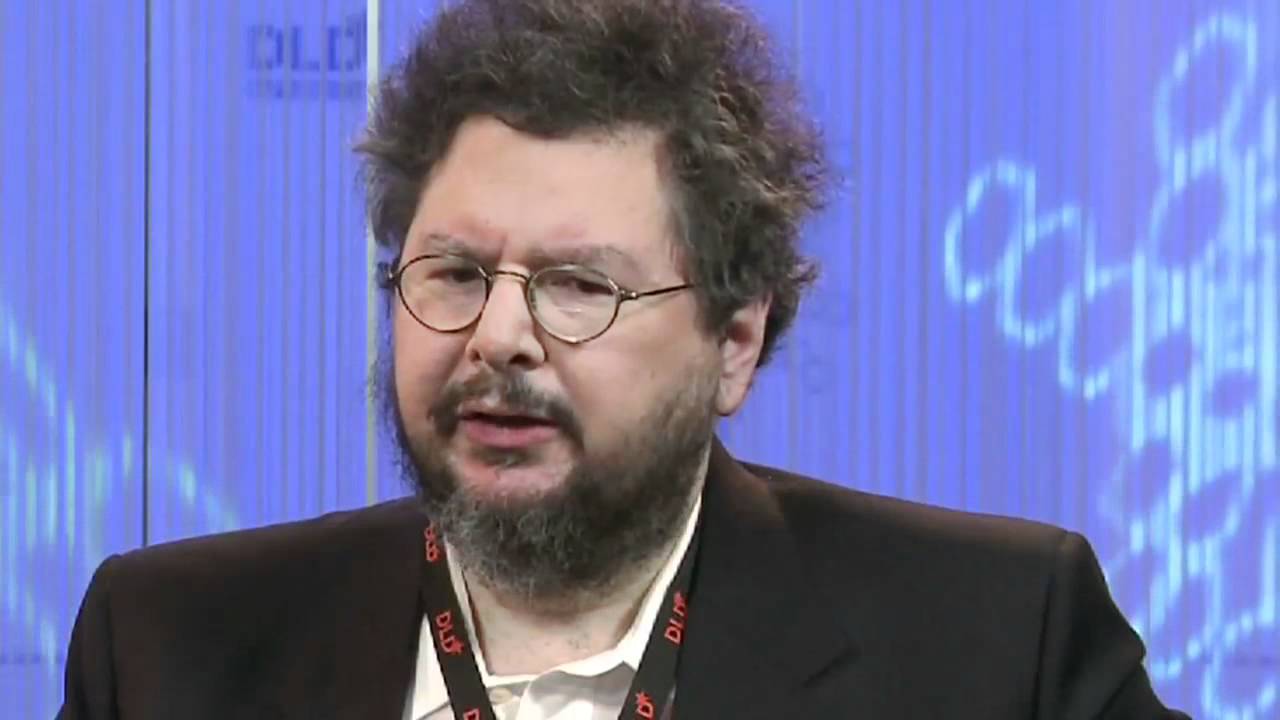
David Gelernter:
David Gelernter is professor of computer science at Yale, chief scientist at Mirror Worlds Technologies, contributing editor at the Weekly Standard, and member of the National Council of the Arts. He is the author of several books and many technical articles, as well as essays, art criticism, and fiction. The "tuple spaces" introduced in Carriero and Gelernter's Linda system (1983) are the basis of many computer-communication and distributed programming systems worldwide. According to Reuters, his book "Mirror Worlds" (Oxford University Press, 1991) "foresaw" the World Wide Web and was "one of the inspirations for Java"; the "lifestreams" system (first implemented by Eric Freeman at Yale) is the basis for Mirror Worlds Technologies' software. Gelernter is also the author of "The Muse in the Machine" (Free Press, 1994), the novel "1939" (Harper Perennial, 1995), "Machine Beauty" (Basic Books, 1998), and most recently, "Judaism: A Way of Being" (Yale University Press, 2010).
----------------------------------------------------------------------------------
TRANSCRIPT:
Question: What is “lifestreaming,” and are modern social networking tools making it universal?
David Gelernter: The first part of your question, lifestreaming is, we defined it and first implemented it back in the mid 1990’s, was a time-based versus space or surface-based organization of information. The idea was that every electronic asset you had, every piece of information, whether it was an email or instant message, whether it was a file or spreadsheet, whether it was a photo or am MP3, it would appear in a single time ordered stream that mirrored the evolution of your life. So, in principle the first thing on the stream would be my birth certificate, a little electronic version of that, my parents would put my school records, health records, whatever of their child onto the stream. And the stream continues to flow forward through time. I can deal with the – the future is available to me as well as the past. I can search in the past to find whatever I want and everything is fully indexed. If, when I schedule things when I know things are coming up, I put them in the future. When I have something I need to return to that I don’t have time for now, I put it in the future.
And together with that, we had an interface. We thought it was important not to only make use of the surface of the screen, but to present displays in depth to make use of the virtual depth of the screen. So, I wasn’t looking at a surface, I was looking through a window through an arbitrarily large information landscape. So, instead of the mouse just moving a cursor over the surface, it would be a robot vehicle moving through free space, or some arbitrary space.
But the basic idea was to assemble just a chronological timeline heterogeneous with just absolutely everything on it. We have seen it commercialized in two different ways. One way, the one that I’m allowed to talk about; I no longer own these patents. The patents have changed hands and the patents are now subject to an enormous lawsuit against Apple, which is not mine because I don’t own the patent, I’m told it is the largest lawsuit in patent history. Apple took these ideas; I’m not in a position to say they stole them, I don’t know if they did or not legally, but these ideas are the basis of Apple’s cover flow of the way they display originally songs on iTunes. Cover Flow has now become a standard way of displaying files on virtually all Apple platforms; Spotlight, which allows you to find files, not by name or folder, but by content. And Time Machine, which is a series of archive things.
Without commenting on the legal aspects, which I’m not capable of doing, those are lifestreams and there are other companies that have done similar things. That makes me angry personally, not because of the money, but because of the deliberate failure to acknowledge work that we would have made freely available as academics and that companies will not acknowledge because there is so much money involved.
Read the full transcript at
Sentinel Indexing in Progress
Metadata and chapters are available. Claim extraction for this episode is pending.
All video content is delivered via YouTube embedded players in accordance with the YouTube Terms of Service. Sentinel provides research tools that promote discovery and accountability across political media.