Big Think
@bigthink·8.8M subscribers·10.1K videos
Big Think Interview With Pedro Noguera | Big Think
Posted
April 24, 2012
Views
4,235
Likes
36
Comments
1
Engagement
0.87%
April 24, 2012
4,235
36
1
0.87%
Every word spoken in this episode is indexed. Type any phrase to jump straight to the moment it was said.
Type any word or phrase that may have been spoken. Click a result to seek the player to that exact moment.
Try a name, a topic, or a quoted line
 21:02Now Playing
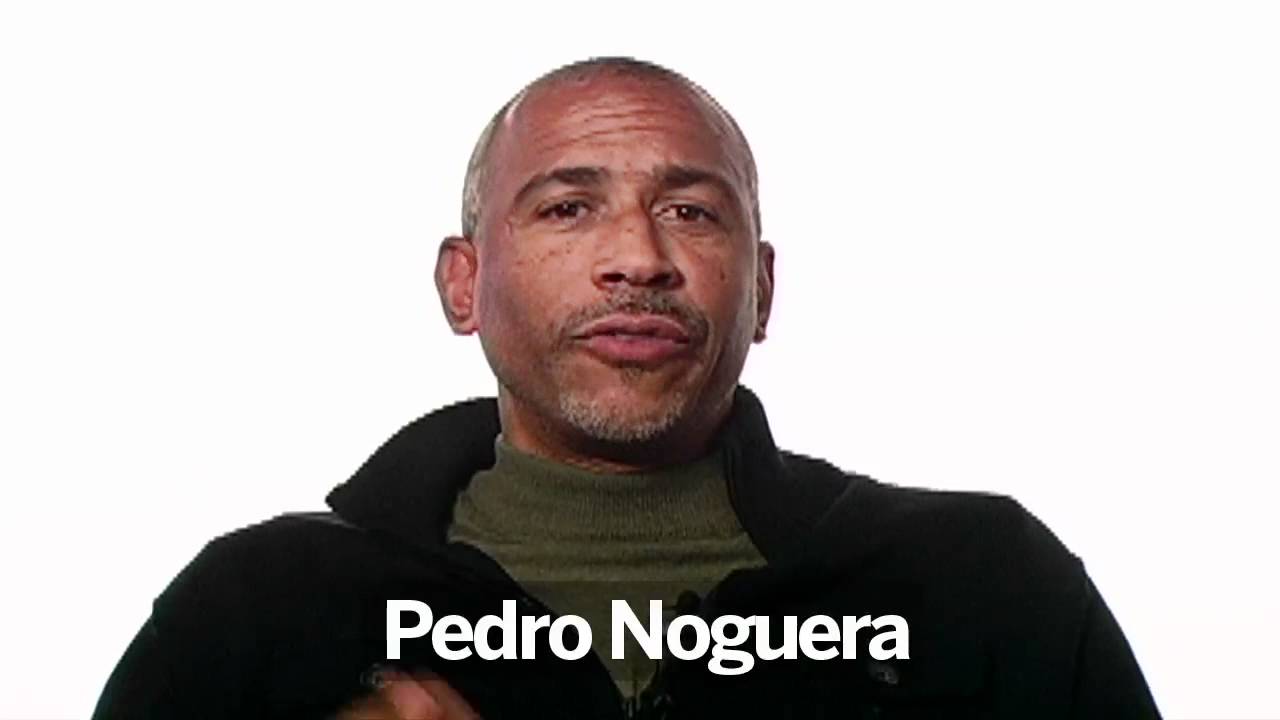
Big Think Interview With Pedro Noguera
New videos DAILY
Join Big Think Edge for exclusive videos
----------------------------------------------------------------------------------
A conversation with the Professor of Teaching and Learning at New York University.
----------------------------------------------------------------------------------
Pedro Noguera:
Pedro Noguera, PhD, is a professor in the Steinhardt School of Culture, Education, and Human Development at New York University. He is also the Executive Director of the Metropolitan Center for Urban Education and the co-Director of the Institute for the study of Globalization and Education in Metropolitan Settings (IGEMS). An urban sociologist, Noguera’s scholarship and research focuses on the ways in which schools are influenced by social and economic conditions in the urban environment. Noguera has served as an advisor and engaged in collaborative research with several large urban school districts throughout the United States. He has also done research on issues related to education and economic and social development in the Caribbean, Latin America and several other countries throughout the world. Between 2000 and 2003, Noguera served as the Judith K. Dimon Professor of Communities and Schools at the Harvard Graduate School of Education. From 1990 to 2000, he was a Professor in Social and Cultural Studies at the Graduate School of Education and the Director of the Institute for the Study of Social Change at the University of California, Berkeley.
----------------------------------------------------------------------------------
TRANSCRIPT:
Pedro Noguera: My name is Pedro Noguera. I’m a professor at New York University. That’s good.
Question: What was your educational experience like growing up?
Pedro Noguera: I was educated partially in New York City in the public schools. We moved from New York to Long Island. I attended public schools in Long Island, a place called Brentwood, very large public school system there. I’ve often said I succeeded in spite of my education, not because of it. I attribute a lot of my own success in education to my parent’s influence, which is ironic because neither of my parents had a high school degree, but they put a lot of emphasis on the importance of education, the importance of learning and so all six of my siblings all graduated from college, very good colleges, so a lot of it was really their influence and what they instilled in us. Schools for me were never, I would say, that intellectually stimulating. There were a few exceptions along the way, but I say a lot of what I learned I learned outside of school as well.
Question: In what areas of education reform are you most actively involved?
Pedro Noguera: Sure. Well I’m a sociologist and the focus of my work for the last 20 years or so has been trying to understand the way the social context influences what goes on within schools, so how change in the economy, changes in communities, demographic changes all impact children’s lives, their families and the schools they attend, and so a lot of my work has been involved in trying to help particularly urban schools, but even suburban and rural schools that are dealing with difficulties in educating all the children they serve, which typically means children of color, children who are poor, children who don’t somehow meet the norm, making sure that they understand what it takes to educate those kids, and I think that that interest comes right out of my own experience in recognizing how vital and how important it is to provide all kids with a solid education.
Question: What causes the high dropout rate in minority communities, and what can curb it?
Pedro Noguera: Well you know there are many factors that influence the dropout rate. What I like to remind people of is dropping out is a symptom of a larger problem and if you don’t address the underlying causes then you never can solve that problem. Kids don’t dropout in high school. They typically the signs that they’re becoming increasingly alienated from school show up much earlier and the problem is that schools don’t intervene early or effectively. Some kids leave because of the pull of the streets. Some kids leave because they need to work to support their family. Some kids leave because nobody at school cares about them. They haven’t made any connections with adults, because they’re bored, because they don’t think what they’re learning is relevant or meaningful, so there are a lot of reasons why kids end up leaving school.
Read the full transcript at
Sentinel Indexing in Progress
Metadata and chapters are available. Claim extraction for this episode is pending.
All video content is delivered via YouTube embedded players in accordance with the YouTube Terms of Service. Sentinel provides research tools that promote discovery and accountability across political media.