Big Think
@bigthink·8.8M subscribers·10.1K videos
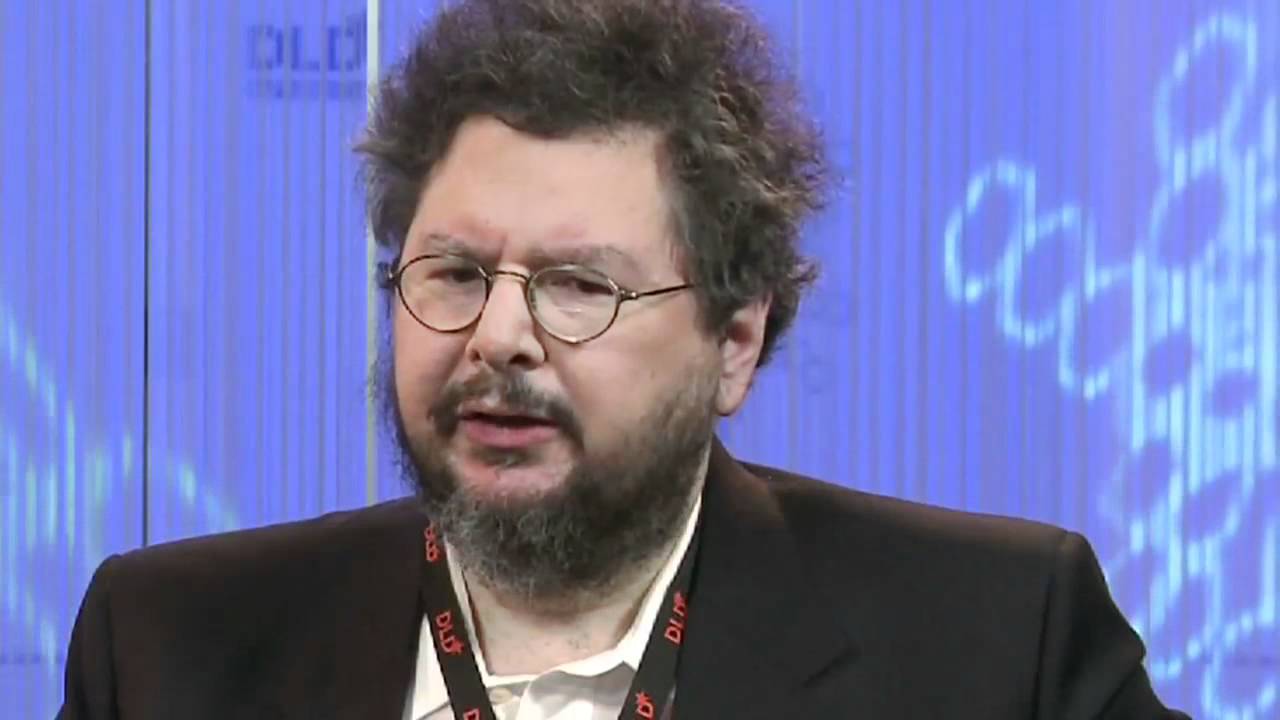
Don't Bring Me Chocolate, Pluck My Eyebrows | Ted Fischer | Big Think
Posted
April 24, 2012
Views
137
Likes
3
Comments
1
Engagement
2.92%
April 24, 2012
137
3
1
2.92%
Every word spoken in this episode is indexed. Type any phrase to jump straight to the moment it was said.
Type any word or phrase that may have been spoken. Click a result to seek the player to that exact moment.
Try a name, a topic, or a quoted line
 5:19Now Playing
Don't Bring Me Chocolate, Pluck My Eyebrows
New videos DAILY
Join Big Think Edge for exclusive videos
----------------------------------------------------------------------------------
How lovers show affection differs from one culture to another. And even the notion of romantic love itself is not confined to a man and a woman.
----------------------------------------------------------------------------------
Ted Fischer:
Edward (Ted) Fischer is the Director of Latin American Studies at Vanderbilt University.
Fischer studies cultural anthropology, specializing in matters of economics and moralities. Most of his fieldwork has been in Guatemala (with the Maya) but he has also worked in and written on Germany and the United States. His books include “Cultural Logics and Global Economies,” “Maya Cultural Activism,” and “Broccoli and Desire.” With Peter Benson he is now working on a project titled “Markets and Moralities.” He also has a video series out from The Teaching Co. titled “Peoples and Cultures of the World.”
He received his PhD, in anthropology at Tulane University and his undergraduate degree from University of Alabama at Birmingham after studying at Birmingham-Southern College.
----------------------------------------------------------------------------------
TRANSCRIPT:
Question: Is romantic heterosexual love the norm?
Ted Fischer: I can and actually let me go back a little bit first and say that romantic love doesn’t have to be between a man and a woman. The evolutionary theory predicts that’s what makes sense. It just sort of fits neatly. But there’s not inherent reason that a man has to fall in love with a woman, and a woman with a man. The same processes of falling in love we find between gay couples and straight couples, and bisexuals across the board. So that’s important to point out. And then along those same lines as you’re saying romantic love varies enormously across cultures. What we imagine as romantic love probably developed in French courts in the 17th and 18th centuries. And this notion of that’s wrapped in love poetry, and sort of the French courtly troubadours and, “I would do anything for my beloved.” Most cultures around the world that’s very foreign. Love is much more pragmatic in many cultures around the world including romantic love. It is a necessity that we live together. It’s a necessity that we form a family. It’s a necessity that we do all of these things. So it’s often much more pragmatic. In most cultures around the world marriages are arranged. And we think of love and marriage -- what’s the Frank Sinatra song? Love and Marriage go together like a horse and carriage. We think of that as being natural. And yet in most societies around the world marriage is arranged, and for very good reasons. The arrangers would say, “My kids don’t know who to marry. They’re too young. They’re being guided by their hormones right now. But we older generation can see what the best match for our children would be.”
And in those cases we can find romantic love evolving after marriage very often. We also find in those case people, young people, who resist their parents arranged marriages, and really follow their heart as we say. And so, the study that we did several years back looked at romantic love cross culturally. The hypothesis of many of our colleagues in anthropology is that romantic love is confined to Europe and to the United States, and to those cultures that have been influenced by us. And in other cultures we find arranged marriages. We find a much more pragmatic approach, and that really isn’t romantic love. But we found that even in cultures with very strict arranged marriage norms, for example, we would find elopements, we would find suicides over unrequited love, we would find love poetry. So even in these cultures with very clear models of how people should pair up, there’s evidence of romantic -- what we would see as romantic love.
Question: How does Western culture influence our notions of love?
Ted Fischer: And I would actually say in our own culture probably our manifestations of love are informed by Romeo and Juliet, and the latest movies we’ve seen at the Cineplex, and love poetry, and so forth. And culture does, even if there’s a biological basis for love, and there seems to be lots of good evidence that there is something electrochemical going on in the brain. Some of these same chemical compounds are found in chocolate and thus we have this folklore about chocolate being the food of love. We can do MRIs and see particular neural networks firing.
Read the full transcript at
Sentinel Indexing in Progress
Metadata and chapters are available. Claim extraction for this episode is pending.
All video content is delivered via YouTube embedded players in accordance with the YouTube Terms of Service. Sentinel provides research tools that promote discovery and accountability across political media.