Big Think
@bigthink·8.8M subscribers·10.1K videos
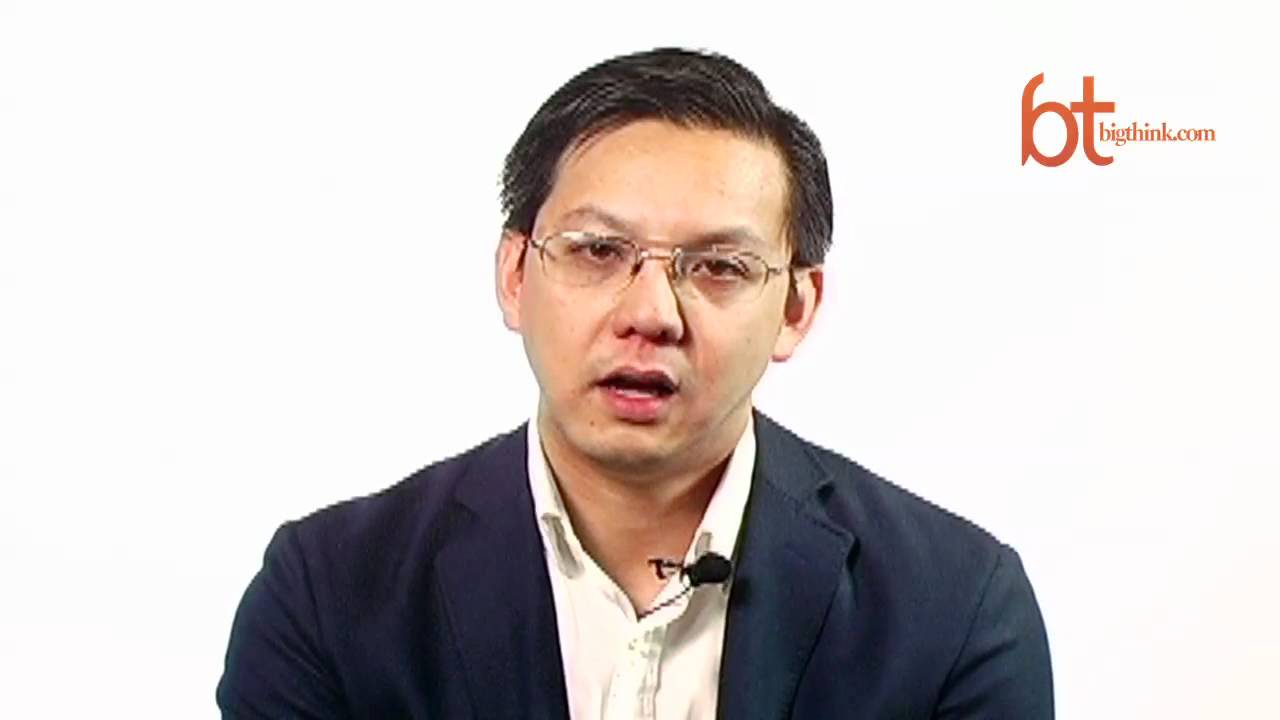
Big Think Interview With Joseph Sussman | Big Think
Posted
April 24, 2012
Views
326
Likes
6
Engagement
1.84%
April 24, 2012
326
6
1.84%
Every word spoken in this episode is indexed. Type any phrase to jump straight to the moment it was said.
Type any word or phrase that may have been spoken. Click a result to seek the player to that exact moment.
Try a name, a topic, or a quoted line
 28:27Now Playing
Big Think Interview With Joseph Sussman
New videos DAILY
Join Big Think Edge for exclusive videos
----------------------------------------------------------------------------------
A conversation with the MIT professor of Civil and Environmental Engineering.
----------------------------------------------------------------------------------
Dr. Joseph M. Sussman:
Dr. Joseph M. Sussman is the JR East Professor (endowed by the East Japan Railway Company) in the Department of Civil and Environmental Engineering and the Engineering Systems Division at the Massachusetts Institute of Technology (MIT), where he has served as a faculty member for 40 years. He is the author of "Introduction to Transportation Systems," a graduate text published in 2000, in use at a number of universities in the U.S. and abroad. It has been translated into Greek, Chinese and Spanish. His book Perspectives on Intelligent Transportation Systems (ITS) was published in 2005. Sussman received the Roy W. Crum Distinguished Service Award from TRB, its highest honor, “for significant contributions to research” in 2001, and the CUTC Award for Distinguished Contribution to University Transportation Education and Research from the Council of University Transportation Centers in 2003. In 2002 ITS Massachusetts named its annual “Joseph M. Sussman Leadership Award” in his honor. He became a fellow of the American Association for the Advancement of Science in 2007. The Engineering School Alumni of the City College of New York (CCNY) gave him its 2008 Career Achievement Award.
----------------------------------------------------------------------------------
TRANSCRIPT:
Question: What is the single greatest challenge facing transportation these days?
Joseph Sussman: People talk about sustainable development. Well, you can’t have sustainable development without sustainable transportation. And when we speak of sustainability we always bring up the three “E’s.” We have the question of economic development, we have the question of environmental protection and we have the question of social equity. The three “E’s.”
And our argument is, the transportation system has to operate on each of those dimensions to be effective. So, building transportation infrastructure in a metropolitan area for example, or an intercity transportation system, such as say the interstate system here in the United States, is done to enhance mobility which is in fact done for the most part to provide economic development opportunities. Now of course, there are all sorts of social factors as well. People visiting family, people going to school, and so forth, but economic development is at the heart of what we’re trying to do when we make investment in the transportation systems.
But that’s not our only goal. In today’s fragile environmental era, one has to be very concerned about the impact that transportation has on the environment, which is the second of the three “E’s.” Environmentally, we’re concerned about a number of things. We’re talking about clean air, we’re talking about clean water, we’re talking about global climate change with greenhouse gases being produced, and transportation is a player in all of those areas. One, pollution is caused by the operation of internal combustion engines, so are greenhouse gases. There’s runoff from roads into water supplies that causes problems in that regard as well. So, one needs to be quite conscious in making environmentally benign decisions when one makes decisions about how to design a transportation system.
But finally, we have the question of social equity. The third of the three “E’s.” And the point with social equity is that if we are not in some way distributing the benefits that are created by transportation systems, the economic development benefits, if we are not distributing those across a broad swath of society, we argue that it won’t be a sustainable solution. It can’t be sustained for a long period of time unless people are sharing in the wealth that is being created through mobility.
Question: What is the federal role and responsibility when it comes to tackling these transportation issues?
Joseph Sussman: The question is finding the proper balance between the public and private sector. We have what are called public-private partnerships that have been in place around the world for many years. The U.S. has been relatively slow to adopt those, but the basic notion is that the public sector contracts with the private sector to build, for example, infrastructure and the private sector was responsible for borrowing the money to build that infrastructure, and then regains its own investment typically through some kind of tolling, some kind of user charge on that infrastructure.
Read the full transcript at
Sentinel Indexing in Progress
Metadata and chapters are available. Claim extraction for this episode is pending.
All video content is delivered via YouTube embedded players in accordance with the YouTube Terms of Service. Sentinel provides research tools that promote discovery and accountability across political media.