Big Think
@bigthink·8.8M subscribers·10.1K videos
Work Starts at 9AM? It'll Cost You | Dr. Joseph M. Sussman | Big Think
Posted
April 24, 2012
Views
354
Likes
2
Engagement
0.56%
April 24, 2012
354
2
0.56%
Every word spoken in this episode is indexed. Type any phrase to jump straight to the moment it was said.
Type any word or phrase that may have been spoken. Click a result to seek the player to that exact moment.
Try a name, a topic, or a quoted line
 6:14Now Playing
Work Starts at 9AM? It'll Cost You
New videos DAILY
Join Big Think Edge for exclusive videos
----------------------------------------------------------------------------------
Dynamic road pricing could solve congestion problems, but is it socially equitable?
----------------------------------------------------------------------------------
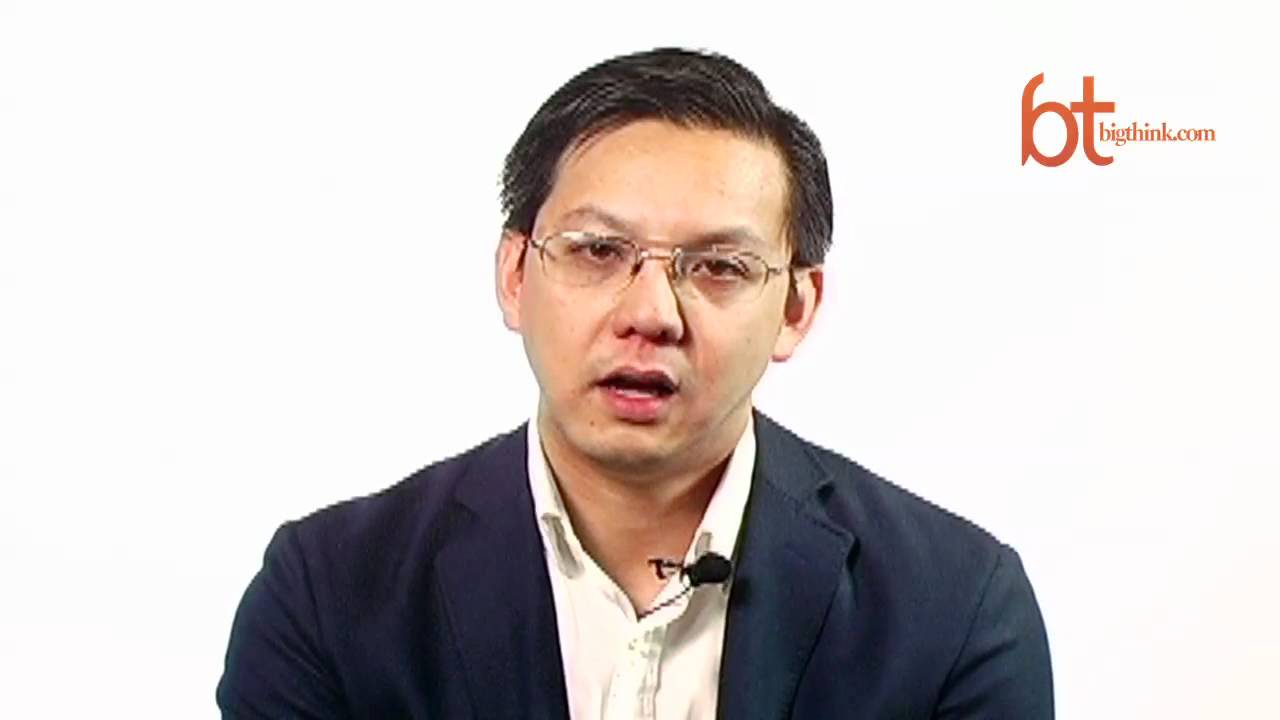
Dr. Joseph M. Sussman:
Dr. Joseph M. Sussman is the JR East Professor (endowed by the East Japan Railway Company) in the Department of Civil and Environmental Engineering and the Engineering Systems Division at the Massachusetts Institute of Technology (MIT), where he has served as a faculty member for 40 years. He is the author of "Introduction to Transportation Systems," a graduate text published in 2000, in use at a number of universities in the U.S. and abroad. It has been translated into Greek, Chinese and Spanish. His book Perspectives on Intelligent Transportation Systems (ITS) was published in 2005. Sussman received the Roy W. Crum Distinguished Service Award from TRB, its highest honor, “for significant contributions to research” in 2001, and the CUTC Award for Distinguished Contribution to University Transportation Education and Research from the Council of University Transportation Centers in 2003. In 2002 ITS Massachusetts named its annual “Joseph M. Sussman Leadership Award” in his honor. He became a fellow of the American Association for the Advancement of Science in 2007. The Engineering School Alumni of the City College of New York (CCNY) gave him its 2008 Career Achievement Award.
----------------------------------------------------------------------------------
TRANSCRIPT:
Question: Eighty-seven percent of travel these days is done by car. How could we help implement this behavioral change?
Joseph Sussman: Behavioral changes are very difficult. On some dimensions I’m optimistic on others I am less optimistic. Certainly there are a lot of forces in place that makes change away from the automobile very difficult. The land use that has grown up around the cities, I mentioned sprawl, makes transportation by anything other than automobile very, very difficult. You can’t provide say heavy rail public transportation of the sort you have in New York City out somewhere in the suburbs. There just isn’t the volume to pay, if you will, for the extraordinary costs there are of building those kinds of systems.
But, yes, there are ways of improving the system and improving behavior. We have this idea of congestion pricing in the transportation field, and this is enabled by the Intelligent Transportation System ideas that we talked about earlier. So, the notion here would be to use pricing as a way of changing people’s behavior, to make particular kinds of trips more expensive, particular kinds of trips less expensive to try to entice them into behaviors that would make sense from a systemic point of view. Make sense not only for them, but make sense for the traveling public at large.
So, you know all about EZ Pass in New York City so one can electronically collect tolls as one zips by the tollbooth at speed without stopping. Well once we have that kind of electronic capability, one can change those tolls and one can do it not only at toll booths, but one can do it along the entire structured infrastructure and one can even start thinking about doing it with GPS so that one is monitoring the flows of vehicles and one is charging the drivers for using the roads as a function of the kind of car they are driving, for example, a less polluting car would be charged less. As a function of where they are driving. If they are driving in a congested area, we want to give them incentive to not drive during the congested period, we would charge them more. It depends on the time of day they are driving. If they are driving at the height of the rush hour, well that’s going to be more expensive then it will be to drive two hours before, or two hours after the peak hour.
So the notion here is that by changing these prices dynamically as a function of time of day, as a function of location, as a function of vehicle type, that one can give incentives to drivers to make different kinds of decisions. So the notion her is that one can perhaps have a lower need, a lesser need, I should say, of building more infrastructure that is built for peak hour capacity by enticing people to drive at some time outside the peak hour.
Read the full transcript at
Sentinel Indexing in Progress
Metadata and chapters are available. Claim extraction for this episode is pending.
All video content is delivered via YouTube embedded players in accordance with the YouTube Terms of Service. Sentinel provides research tools that promote discovery and accountability across political media.