Big Think
@bigthink·8.8M subscribers·10.1K videos
The Forgotten History of Project Orion | Freeman J. Dyson | Big Think
Posted
April 24, 2012
Views
2,474
Likes
31
Comments
8
Engagement
1.58%
April 24, 2012
2,474
31
8
1.58%
Every word spoken in this episode is indexed. Type any phrase to jump straight to the moment it was said.
Type any word or phrase that may have been spoken. Click a result to seek the player to that exact moment.
Try a name, a topic, or a quoted line
 6:27Now Playing
The Forgotten History of Project Orion
New videos DAILY
Join Big Think Edge for exclusive videos
----------------------------------------------------------------------------------
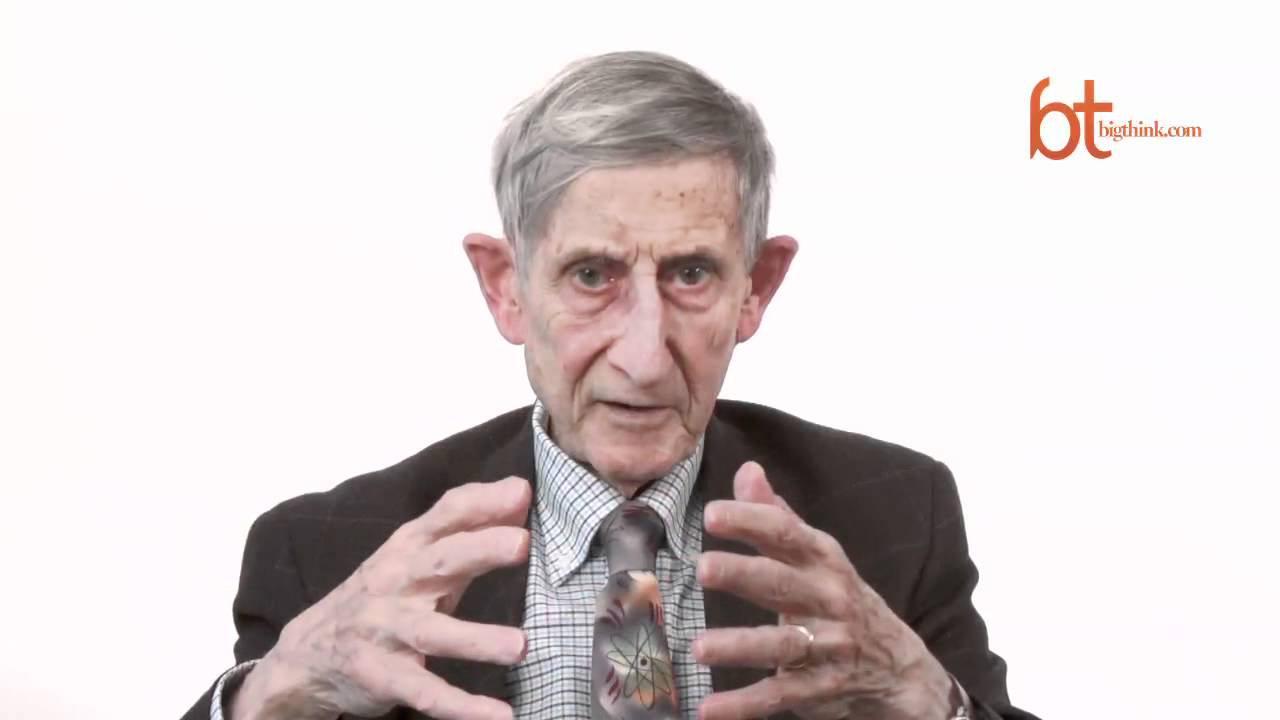
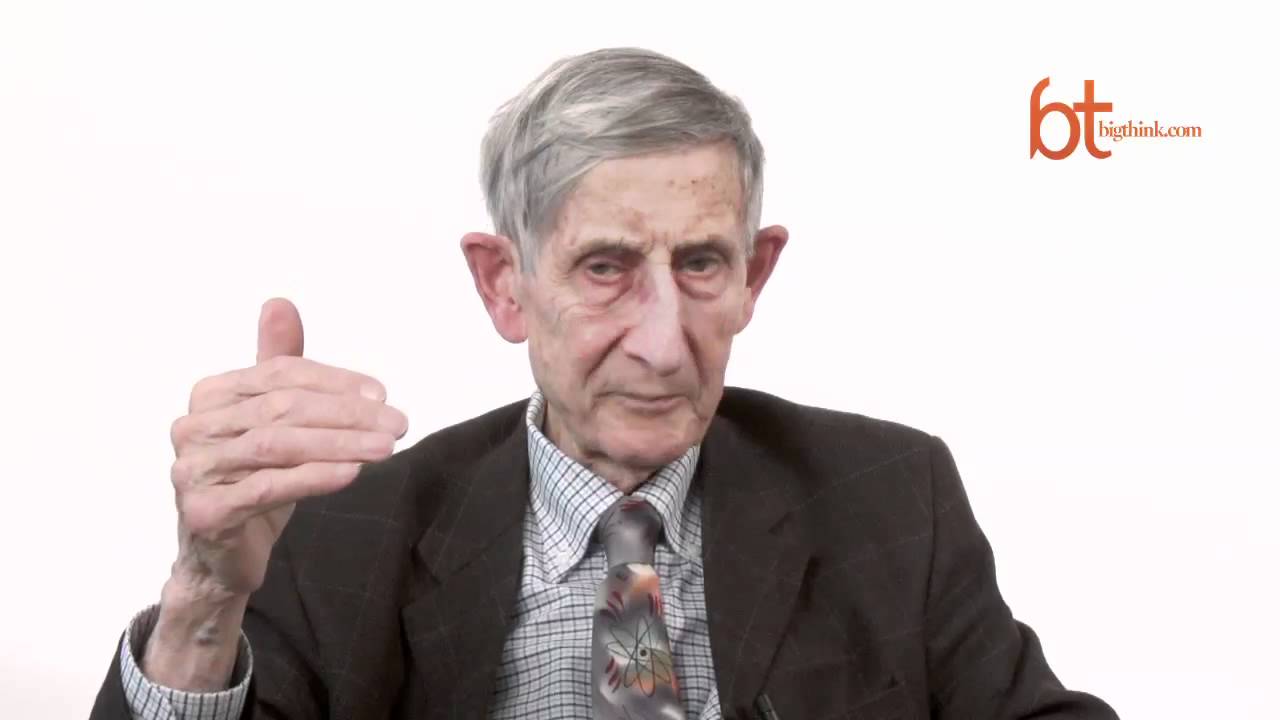
With NASA’s future in doubt, the physicist recalls designing an ingenious (and sadly, radioactive) rocket that could have had us “scooting all around the solar system” 50 years ago. Will we ever find a better way to reach the stars?
----------------------------------------------------------------------------------
Freeman J. Dyson:
Freeman J. Dyson is Professor Emeritus of Mathematical Physics and Astrophysics in the School of Natural Sciences at the Institute for Advanced Study in Princeton. He has taught as a professor at the Institute since 1953, prior to which he was a professor for two years at Cornell University. His work on quantum electrodynamics marked an epoch in physics, with the techniques he used in this domain forming the foundation for most modern theoretical work in elementary particle physics and the quantum many-body problem. He is also celebrated as an author on science and related topics; his books include "Disturbing the Universe" (1966), "Weapons and Hope" (1984), "The Scientist as Rebel" (2006), and "A Many-Colored Glass: Reflections on the Place of Life in the Universe" (2007).
----------------------------------------------------------------------------------
TRANSCRIPT:
Question: What was Project Orion?
Freeman Dyson: This was in the year 1957 when the Russians sent up the first satellite, which they called Sputnik, which means companion. It was a companion for the earth. So this Sputnik was up there in space and it was making everybody nervous because if the Russians could send satellites into space they could also throw missiles at us and we at that time didn’t have any missiles which we could throw at them. So it was a scary moment and so it was a moment when you could get money very easily for crazy projects and so my friend, Ted Taylor, who was a young physicist, actually younger than me, he had this idea of building a spaceship with nuclear bombs, which sounds crazy and in a certain way it is crazy, but it could have actually… it could have worked and so I thought that would be exciting to do. I had never done anything like that. I had been always just a mathematician and working on paper, but so that gave me a chance to do something real, so I moved to San Diego in California and joined a company called General Atomic, which is still there and went to work on this spaceship and it looked as though we might even get the green light actually to go ahead and build it, but in the end of course we didn’t. The fatal flaw of that whole scheme is that it spreads radioactivity all around. You’re exploding bombs in big numbers, so you really do make a tremendous mess, and so in the end common sense prevailed and they decided to go ahead with ordinary rockets and not with nuclear bombs, but we had a great time. We studied the theory of this and the engineering. We had a lot of good engineers and we actually did little tests of chemical explosives building little model spacecraft, which would go pop, pop, pop, pop, just up in the sky and come down again and just to show that we knew how to do it, so we had every Saturday morning we didn’t get paid for that, but every Saturday morning we’d go and fly our little models. The rest of the week we’d do the serious stuff. So I spent a year and a half there and the project actually lasted for seven years, but by the end of the first year it was pretty clear that it wasn’t going to fly.
Question: What were the theoretical possibilities of the Orion mission?
Freeman Dyson: If it had been given the green light we could have gone to Mars in about five years. I mean the thing started in ’58 and we planned to have a Mars mission already within five years and we’d be scooting all around the solar system. I mean it was a very, very high performance ship, far better than anything we have today, and it would have easily gone to Mars and back and to Jupiter, the satellites of Saturn and all the interesting places in the solar system. We could have gone scooting around, and of course we intended to go ourselves. This was a big ship and it was with a crew. We imagined we would have a crew of about 40 people, so it was on the grand scale, and it would have been comparatively cheap because it was built like a submarine, not like an airplane. It was heavy engineering and so a lot cheaper than aerospace.
Question: Will we ever be able to accomplish those feats through some alternative technology?
Read the full transcript at
Sentinel Indexing in Progress
Metadata and chapters are available. Claim extraction for this episode is pending.
All video content is delivered via YouTube embedded players in accordance with the YouTube Terms of Service. Sentinel provides research tools that promote discovery and accountability across political media.