Big Think
@bigthink·8.8M subscribers·10.1K videos
Big Think Interview With Doug Malewicki | Big Think
Posted
April 24, 2012
Views
291
Likes
4
Engagement
1.37%
April 24, 2012
291
4
1.37%
Every word spoken in this episode is indexed. Type any phrase to jump straight to the moment it was said.
Type any word or phrase that may have been spoken. Click a result to seek the player to that exact moment.
Try a name, a topic, or a quoted line
 22:29Now Playing
Big Think Interview With Doug Malewicki
New videos DAILY
Join Big Think Edge for exclusive videos
----------------------------------------------------------------------------------
A conversation with the President and Chief Scientist of AeroVisions Inc..
----------------------------------------------------------------------------------
Doug Malewicki:
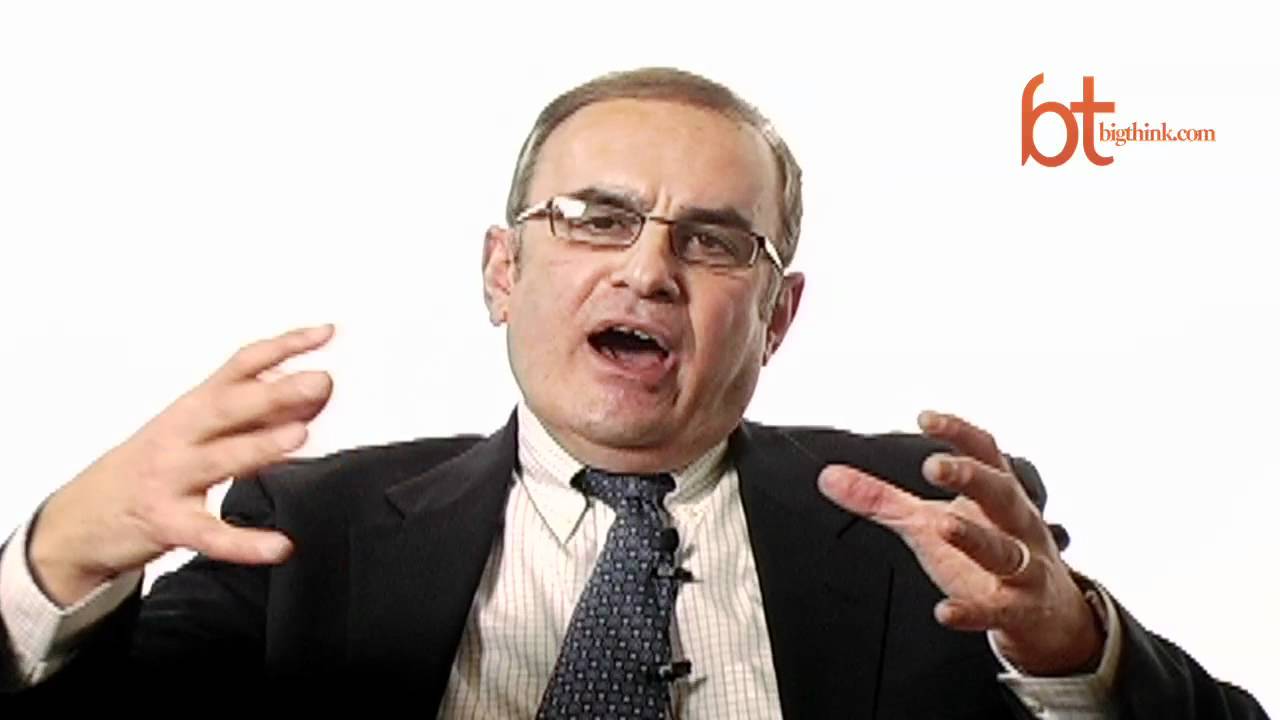
Doug Malewicki is President and Chief Scientist for AeroVisions Inc., a company he founded in 1974 and incorporated in 1980 for the purpose of developing, promoting and commercializing his numerous inventions. His current main focus is his super-aerodynamic, lightweight, high speed, low cost SkyTran invention – an on-demand, personalized MagLev transit system. In the early 80’s he set two official Guinness World records for achieving over 150 miles per gallon fuel efficiency on cross-country runs at freeway speeds driving his California Commuter. SkyTran will obtain over 200 miles per gallon equivalent while speeding along at 100 miles per hour.
----------------------------------------------------------------------------------
TRANSCRIPT:
Question: What was the genesis of the Sky Tran idea?
Doug Malewicki: Years and years ago, the wife and I were driving to a movie down Culver, which is divided with a bunch of poles and the idea hit me. But the idea was stimulated by a flyer we got from the Mayor of Irvine talking about $120 million light rail project for Irvine which seemed like a ridiculous amount of money 20 years ago. And I kind of figured this out based on my previous experience with the streamlined California Commuter that wow, we can move a lot of people around very fast with aerodynamic little vehicles, low power, and I think I was up until 2:00 in the night after that movie doing a lot of math and calculations because that’s what this all boils down to.
Question: How does the Sky Tran system work?
Doug Malewicki: We kind of call it the physical Internet. And it will be silicon-based transportation. Silicone is something different. We will have little vehicles, two-passenger tandem vehicles, very streamlined; neighborhood speed is 35 mph, major arteries is 100 mph, intercity 150 mph, and they have to be MagLev. You can’t have little vehicles with little wheels and gears, there are other personal rapid transit systems, but they’re limited to about 35-45 mph and if you get a lot of utility out of those – say, you’re putting on 60,000 miles a month, you’re changing tires and gears out all the time, we will have a maintenance nightmare. MagLev, nothing is contacting. There is no wear. So, we have to be MagLev, we have to be very small frontal area and very streamlined. And we’re talking about the equivalent of 200 mpg efficiency in terms of energy costs and no fossil fuels to burn; totally non-polluting. These things are small and light enough that all of a sudden we’re discovering that we can afford to have them solar powered. Now, solar is very expensive, but if you had a train, you couldn’t even create enough power to move a million pounds, but when you’re talking about a 200-pound vehicle with say 500 pounds of payload, solar become pretty practical. So, we may be a total non-grid powered system of the future.
Solar-powered Sky Tran, the solar can be anywhere. Ideally somewhere out in the desert. You just have to look at the costs to install it. There’s new nano-solar, which apparently is going to cut down the costs of solar by a factor of 10, and then they’re saying when we figure out some new brilliant things to cut it down by a factor of five, it will be the choice for all kinds of power. But in the meantime, we’ve got to get rid of fossil fuels. This is one thing that Sky Tran enables is getting rid of fossil fuels and moving people around fast everywhere, non-stop.
Sky Tran runs up in the air on elevated, we call them micro-freeways, guide ways. They’re trapped, they can never derail, they’re up above all traffic, so you don’t have to worry about hitting pets, or potholes in the road; there’s no such critters. You can’t hit kids or other people. People are finally becoming aware of the automatic braking systems for cars that have been around for 10 years, and we’ve been talking about that for Sky Tran forever. You need that. So, if it senses something has happened to a vehicle ahead, it will just stop automatically.
Question: How would the Sky Tran eliminate rush-hour traffic?
Read the full transcript at
Sentinel Indexing in Progress
Metadata and chapters are available. Claim extraction for this episode is pending.
All video content is delivered via YouTube embedded players in accordance with the YouTube Terms of Service. Sentinel provides research tools that promote discovery and accountability across political media.