Big Think
@bigthink·8.8M subscribers·10.1K videos
An Education in Science and Suffering | Freeman J. Dyson | Big Think
Posted
April 24, 2012
Views
426
Likes
13
Engagement
3.05%
April 24, 2012
426
13
3.05%
Every word spoken in this episode is indexed. Type any phrase to jump straight to the moment it was said.
Type any word or phrase that may have been spoken. Click a result to seek the player to that exact moment.
Try a name, a topic, or a quoted line
 2:36Now Playing
An Education in Science and Suffering
New videos DAILY
Join Big Think Edge for exclusive videos
----------------------------------------------------------------------------------
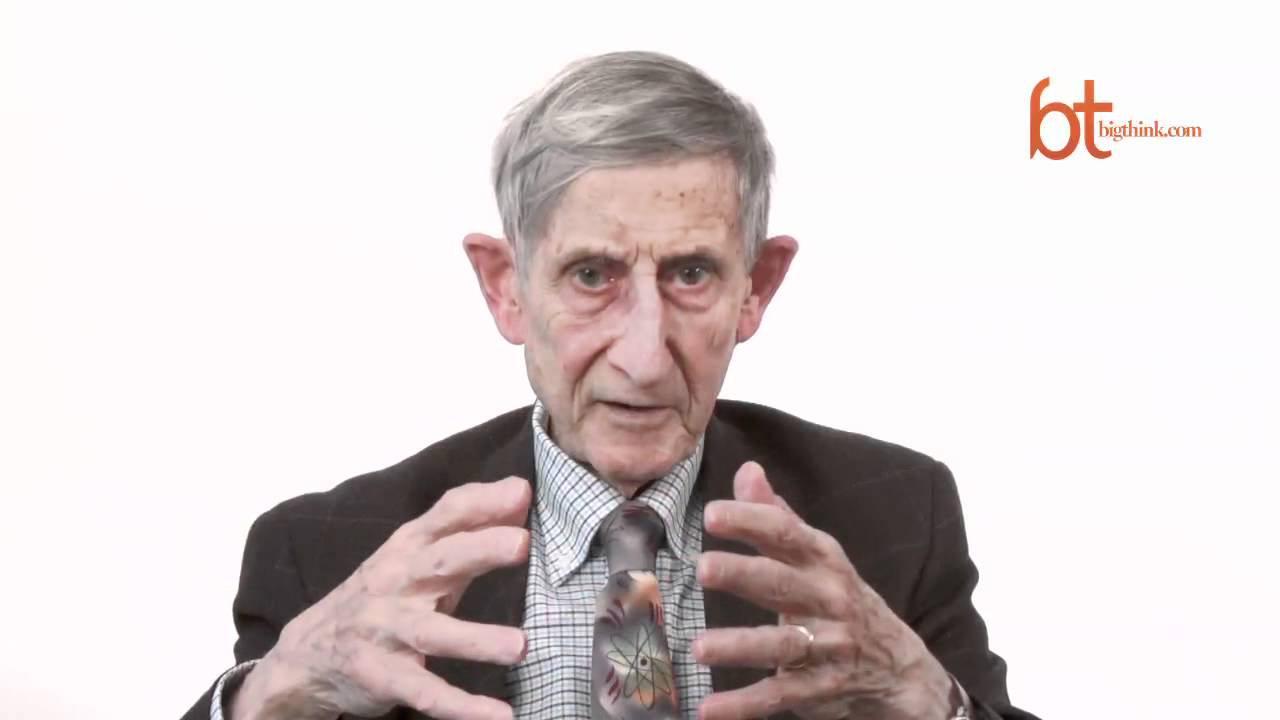
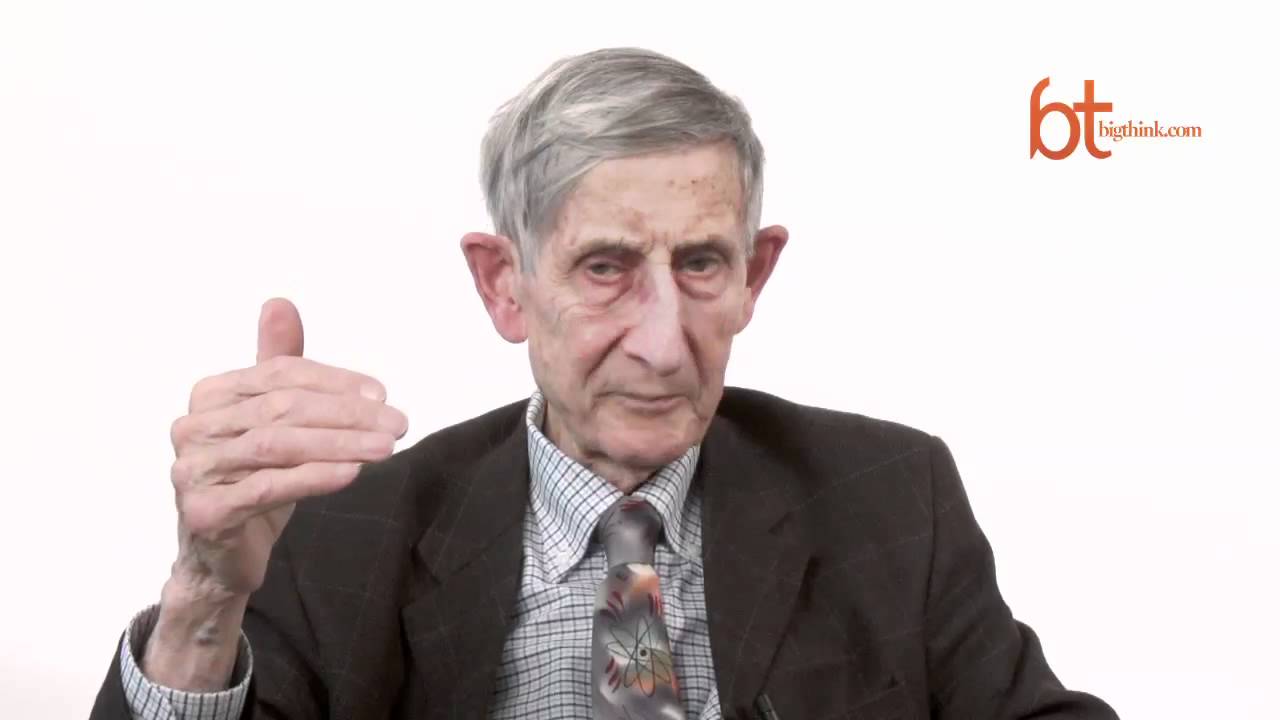
Freeman Dyson fell in love with math, science, and nature as a child. Later, as a statistician in World War II, he had a “front-row seat view” of mass tragedy.
----------------------------------------------------------------------------------
Freeman J. Dyson :
Freeman J. Dyson is Professor Emeritus of Mathematical Physics and Astrophysics in the School of Natural Sciences at the Institute for Advanced Study in Princeton. He has taught as a professor at the Institute since 1953, prior to which he was a professor for two years at Cornell University. His work on quantum electrodynamics marked an epoch in physics, with the techniques he used in this domain forming the foundation for most modern theoretical work in elementary particle physics and the quantum many-body problem. He is also celebrated as an author on science and related topics; his books include "Disturbing the Universe" (1966), "Weapons and Hope" (1984), "The Scientist as Rebel" (2006), and "A Many-Colored Glass: Reflections on the Place of Life in the Universe" (2007).
----------------------------------------------------------------------------------
TRANSCRIPT:
Question: How did you first become interested in science?
Freeman Dyson: Yeah, it’s hard to tell of course, but I’ve been interested in science certainly from a child. I was mostly interested in numbers. I was calculating things at a very young age. I just fell in love with numbers and then it spread from there to the rest of nature and I became… I remember the total eclipse of the sun, which happened when I was three, and I was furious with my father because he wouldn’t take us to see it. It would have meant about a whole day’s driving and anyways, so he said no, you can’t see the partial eclipse and that’s it, and I thought that was terribly unfair.
Question: What was your science education like?
Freeman Dyson: So, well I never learned much science in school. That was I think an advantage in the old days. I grew up in England and we spent most of the time on Latin and Greek and very little on science, and I think that was good because it meant we didn’t get turned off. It was… Science was something we did for fun and not because we had to.
Question: What was your experience of World War II like?
Freeman Dyson: Yes, well I was 15 when the war started, so for a long time I just stayed in school, but then so I was lucky. I had only two years of the war and so I went to work for the Royal Air Force when I was 19, which was already just two years before it ended, so I went to the **** headquarters and that was July ’43, and so I had just two years of it, the last two years and I was working as a statistician mostly just collecting all the information about the Air Force operations, particularly the bombing of Germany, so I had a sort of front-row seat view of that. Of course it was a total shambles, the whole campaign. It was a great tragedy for both sides and, well, there was nothing I could do about it.
Recorded March 5th, 2010
Interviewed by Austin Allen
Sentinel Indexing in Progress
Metadata and chapters are available. Claim extraction for this episode is pending.
All video content is delivered via YouTube embedded players in accordance with the YouTube Terms of Service. Sentinel provides research tools that promote discovery and accountability across political media.