Big Think
@bigthink·8.8M subscribers·10.1K videos
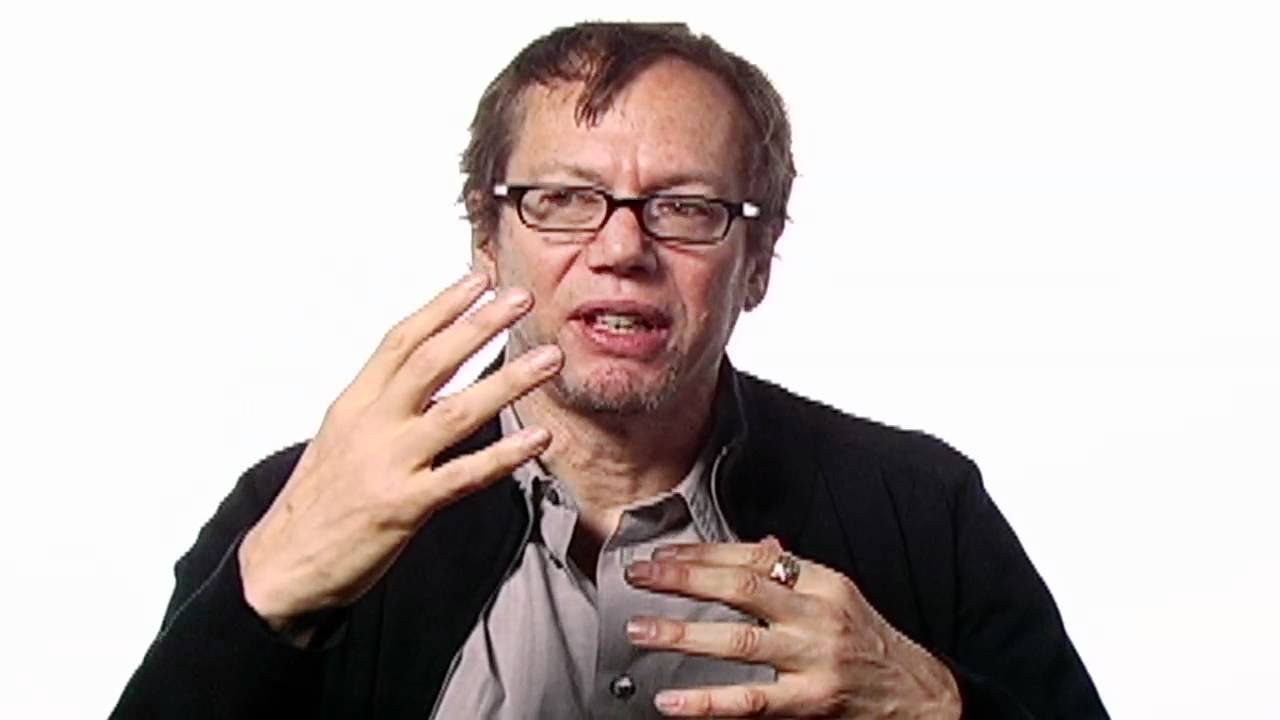
Dissecting the Bubbles | Dr. Vernon L. Smith | Big Think
Posted
April 24, 2012
Views
644
Likes
12
Comments
1
Engagement
2.02%
April 24, 2012
644
12
1
2.02%
Every word spoken in this episode is indexed. Type any phrase to jump straight to the moment it was said.
Type any word or phrase that may have been spoken. Click a result to seek the player to that exact moment.
Try a name, a topic, or a quoted line
You’re on April 24, 2012. Earlier episodes are to the left, later ones to the right — the row keeps loading as you go. Click any card to open it.
 Apr 24, 201211:30Now Playing
Dissecting the Bubbles
New videos DAILY
Join Big Think Edge for exclusive videos
----------------------------------------------------------------------------------
Economist Vernon Smith has said that most bubbles do not bring down the entire economy when they pop. So what happened this time?
----------------------------------------------------------------------------------
Dr. Vernon L. Smith:
Dr. Vernon L. Smith was awarded the Nobel Prize in Economic Sciences in 2002 for his groundbreaking work in experimental economics. Dr. Smith has joint appointments with the Argyros School of Business & Economics and the School of Law, and he is part of a team that will create and run the new Economic Science Institute at Chapman.
----------------------------------------------------------------------------------
TRANSCRIPT:
Question: What are your findings about asset market bubbles?
Vernon Smith: Money is a problem both in the world and in the asset trading markets in the laboratory. Now of course asset market bubbles are much older. They started centuries ago in the economy. We didn’t get around to doing any experiments on them until you know the early 1980s and one of the things that was so amazing about these experiments is that we thought we were creating an environment where it would be transparent what the fundamental value was and that people would trade at that fundamental value and far from being based on asymmetric information in these experiments everyone had the same information and they had complete information and in spite of this we got the bubbles and that surprised us. At first we thought there was something wrong with the experiments and but it turned out that they replicated very easily and not only with undergraduate subjects, but also business people and at one time in frustration we went into Chicago and recruited some over the counter traders in the stock market and we put them in an experiment and they gave us a nice bubble. So these are very robust and money is at the core of both bubbles in the field and bubbles in the laboratory. And in fact we did see in an asset market trading experiment we give people endowments of cash and shares and then tell them what the dividend range is, the dividend distribution, the realizations at the end of each period and in terms of the dividend draws and this is what determines the fundamental value or holding value of the shares and you can do an experiment where you’d give group A say subjects given endowments of shares and cash and then group B you can give them twice of three times as much cash, but the same endowments of shares and you’ll get a much larger bubble in the second case even though there is nothing changed about the fundamental value of the shares. So the laboratory results make it very clear that it’s cash flopping around in the system that tends to give you these runaway asset market bubbles.
Question: You go on to note that historically most bubbles do not bring down the entire economy when they pop. What happened this time?
Vernon Smith: I think of the housing bubble as the asset bubble that blindsided the economy. If you look at bubbles in stock markets they do not cause general problems in the economy. We had the dot com stock bubble that ran all through the nineties and peeked out in 2000 and crashed and you had about 10 trillion dollars loss in asset market value as a result of that stock market bubble and it had a minor affect, small affect on the banking system and the economy generally. On the other hand, if you look at 2001 when we lost about three trillion dollars in value in the housing market it devastated the banking system and the reason for this is really I think quite clear. In the stock market going clear back to the late 1920s we have always had brokers themselves require margins when you buy stocks. If you go back even to the late 1920s brokers were requiring 45 and 50 percent margin requirements when you bought securities and in the case of risky stocks they would require as much as 70 or 75 percent margin requirements and what that means is that you simply cannot buy stocks on margin the way you can buy homes or you could buy homes on margin with very low down payments. Even with loans in the stock market you have to keep in mind that those are essentially call loans. Now what that means is if you have a 50% margin requirement if you buy securities, meaning you have to put half the cash, if those stocks that you buy decline in price and the total value of your portfolio becomes less than 50% of the stocks that you borrowed on your broker will simply sell some of your shares in order to cover that loss and you can’t even prevent that.
Read the full transcript at
Sentinel Indexing in Progress
Metadata and chapters are available. Claim extraction for this episode is pending.
All video content is delivered via YouTube embedded players in accordance with the YouTube Terms of Service. Sentinel provides research tools that promote discovery and accountability across political media.