Daniel Davis Deep Dive
@danieldavisdeepdive·442K subscribers·4.9K videos
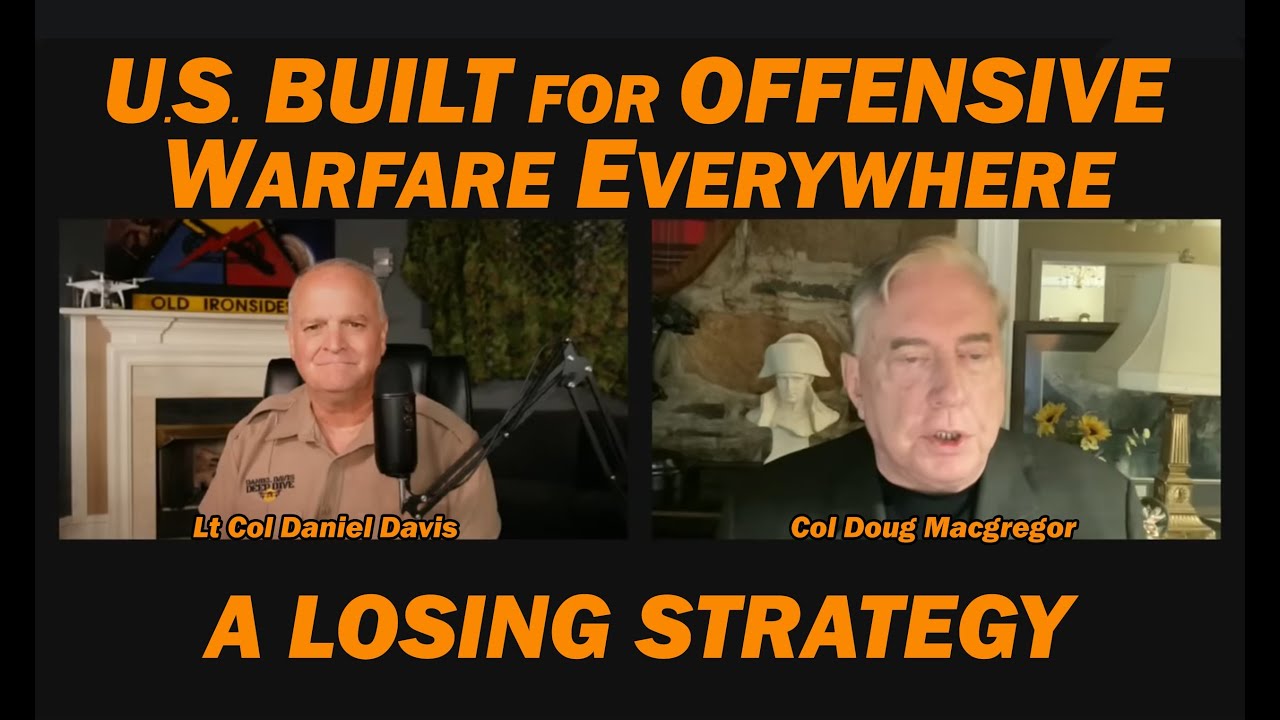
Col Doug Macgregor: U.S. Built for Offensive Warfare Everywhere - A LOSING STRATEGY
Posted
October 5, 2025
Views
126,165
Likes
4,462
Comments
543
Engagement
October 5, 2025
126,165
4,462
543
3.97%
Every word spoken in this episode is indexed. Type any phrase to jump straight to the moment it was said.
Type any word or phrase that may have been spoken. Click a result to seek the player to that exact moment.
Try a name, a topic, or a quoted line
 28:06Now Playing
Daniel Davis Deep Dive Merch: Etsy store
DOUG's DEFENSE PAPER: TAMING THE WARFARE STATE
Col Doug Macgregor warns U.S. forces are overstretched and faces the real risk of three simultaneous major conflicts: Ukraine, the Middle East, and a potential crisis in Venezuela — which could spark wider Latin American opposition.
Current posture is criticized: we’re spending more without changing force structure, keeping outdated equipment and too many forward-deployed forces that become easy targets in high-end war.
The Secretary’s plan to cut general/officer ranks is insufficiently explained — trimming leaders isn’t a strategy unless tied to a clear, governing grand strategy and structural changes.
The speaker calls for a new grand strategy whose core proposals include:
“Defend America first” — prioritize Western Hemisphere, U.S. territory, borders, coastal waters and airspace; avoid the use of force unless vital interests or territory are directly attacked.
Scale back overseas presence (reassess ~800 bases) and keep only the bases needed to protect critical lines of communication and strategic interests.
Adopt a no-first-use nuclear posture.
Create a stronger national operational / chief of defense (a real general staff with merit-based promotion, examinations, and authority) to replace the current weaker chairman role.
Invest in a 21st-century force through experimentation and new force design rather than incremental tweaks to Cold-War-era structures.
Force-design priorities: shift investment toward Intelligence, Surveillance, Reconnaissance (ISR), long/medium-range strike, and integrated air defenses (including North America’s homeland defenses). Maneuver forces should operate under an ISR-strike umbrella rather than relying on large overseas massed deployments.
Ukraine’s war is presented as validation of the ISR–strike model: massed formations are now highly vulnerable to persistent surveillance and long-range strikes. AI and robotics will only accelerate that trend.
Practical points: meaningful change requires time and real experimentation (isolated units given new tech and command authorities), and a decade-scale effort to redesign forces and doctrine.
Sentinel Indexing in Progress
Metadata and chapters are available. Claim extraction for this episode is pending.
All video content is delivered via YouTube embedded players in accordance with the YouTube Terms of Service. Sentinel provides research tools that promote discovery and accountability across political media.