Daniel Davis Deep Dive
@danieldavisdeepdive·442K subscribers·4.9K videos
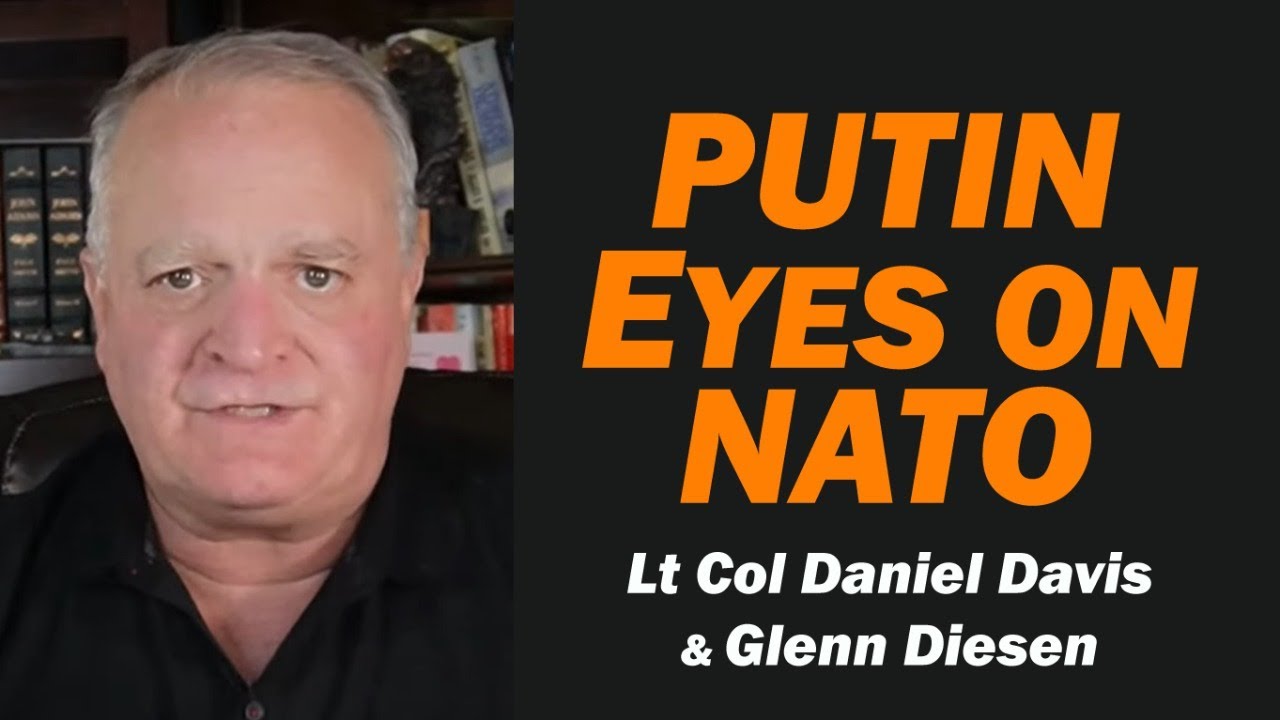
Putin Eyes on NATO /Lt Col Daniel Davis & Glenn Diesen
Posted
October 7, 2025
Views
74,747
Likes
3,399
Comments
437
Engagement
October 7, 2025
74,747
3,399
437
5.13%
Every word spoken in this episode is indexed. Type any phrase to jump straight to the moment it was said.
Type any word or phrase that may have been spoken. Click a result to seek the player to that exact moment.
Try a name, a topic, or a quoted line
 53:11Now Playing
Daniel Davis Deep Dive Merch: Etsy store
Please visit Glenn at his YT channel:
The discussion traces the breakdown of post–Cold War security arrangements and the roots of today’s U.S.–Russia tensions.
Glenn Diesen begins by warning that U.S. and European policy toward Iran and Russia ignores both countries’ security perspectives. Western discourse, he argues, frames adversaries as irrational aggressors, blocking realistic debate about mutual security concerns.
He recalls the 2007 Munich Security Conference, where Vladimir Putin criticized the “unipolar world order,” warning that U.S. dominance and NATO expansion would lead to instability and eventual conflict. Putin urged for a pan-European security framework where no side increases its security at another’s expense.
Despite the warning, NATO’s 2008 Bucharest Summit offered future membership to Ukraine and Georgia, provoking Russian outrage. That same year, the Georgia war broke out—later found by an EU investigation to have been initiated by Georgian forces. Western leaders such as Merkel, Burns, and Gates had all warned that NATO’s eastward push could trigger war or civil conflict in Ukraine.
From 2014 onward, following the Maidan coup, Ukraine increasingly integrated with NATO—reforming its military, restricting Russian cultural and religious influence, and becoming heavily armed by Western powers. NATO and U.S. military exercises in Ukraine multiplied, making it effectively a de facto NATO outpost.
By 2021, Russia concluded that the window to prevent NATO encirclement was closing. Analysts—including former CIA officials—warned that Russia might soon act militarily or lose its deterrent position. The U.S.-Ukraine Strategic Partnership Agreement (Nov 2021) was seen in Moscow as the final provocation.
When Russia invaded in February 2022, Western media framed it as “unprovoked,” but the speaker insists this ignored years of ignored warnings and incremental provocations.
The result, he argues, is a war that Ukraine cannot win militarily, given its manpower shortages and Russia’s larger industrial and military capacity. Continued Western escalation only deepens the conflict, weakens Ukraine, and risks a wider or even nuclear confrontation.
He concludes that Western policy has become self-defeating—escalating tensions, undermining prospects for peace, and setting conditions for eventual Russian strategic success despite short-term Western unity.
Sentinel Indexing in Progress
Metadata and chapters are available. Claim extraction for this episode is pending.
All video content is delivered via YouTube embedded players in accordance with the YouTube Terms of Service. Sentinel provides research tools that promote discovery and accountability across political media.