Dr John Kruse
@drjohnkruse·16.8K subscribers·484 videos
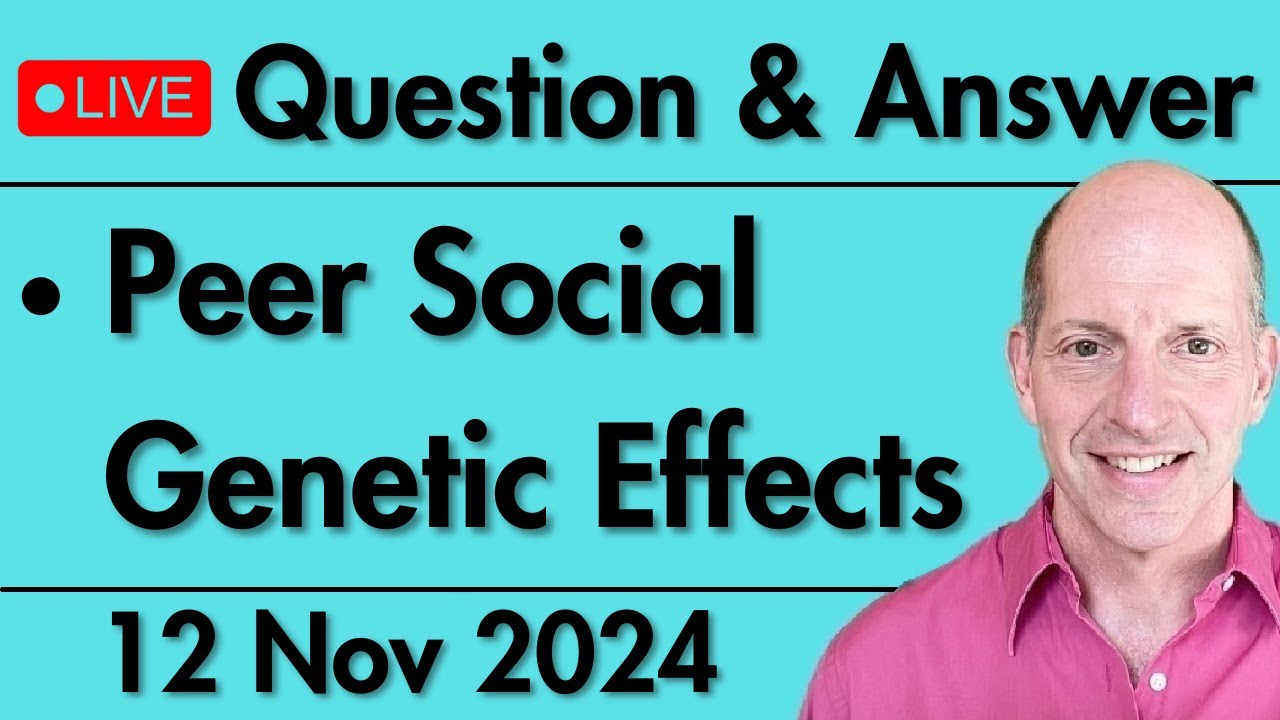
Peer Social Genetic Effects: Hang Out With Good People
Posted
November 10, 2024
Views
442
Likes
24
Comments
12
Engagement
8.14%
November 10, 2024
442
24
12
8.14%
Every word spoken in this episode is indexed. Type any phrase to jump straight to the moment it was said.
Type any word or phrase that may have been spoken. Click a result to seek the player to that exact moment.
Try a name, a topic, or a quoted line
 18:09Now Playing
Chapter List:
We're familiar with the fact that our genetic inheritance plays a role in whether or not we develop a mental health condition. Our environment also clearly plays a role. Researchers have been exploring the role that our peers have in shaping our own mental health.
A new study shows that our peer's genetic propensity to mental health conditions (family genetic risk score or FGRS), separate from whether they are even displaying pathologic behavior themselves, can increase our risk for later mental health problems.
By examining everyone born in Sweden between 1980 and 1998, researchers showed that the FGRS score of the students in an individual's high school had a bigger impact on that person's future drug or alcohol misuse, depression, and anxiety than did who was in their middle school, or who lived in the neighborhood. Furthermore, influence of the peer FGRS on later behavior of the individual was not mediated by overtly pathological behavior (drug arrests, depression hospitalizations) within their peer group. The impact on subsequent drug and alcohol abuse was higher than for depression and anxiety.
Confounding socioeconomic and educational factors could not explain these effects. The presumption is that "lower level" behaviors of drug or alcohol use, or how peers deal with stress, may be what mediates the effect of their genes on their peer's later behavior.
Your mama was right when she told you to watch who you were hanging out with in high school. And she was right again when you said that they hadn't gotten into trouble with the law, or that their behaviors weren't that bad.
(Apologies for using judgmental terms of good and bad for summarizing complex psychobehavioral responses to the world.)
-----
Free link to my Medium Article on Peer Social Genetics:
Follow on Medium for hundreds of full length articles on this subject and more!
Access to other Medium articles requires paid membership.
-----
Psychiatrist, neuroscientist, and author John Kruse, MD, PhD presents practical, actionable, well-researched information about treatment options that scientists and clinicians recommend for adult ADHD and other mental health conditions.
Subscribe if you're curious about how neuroatypical brains can optimize their functioning in our shared, and somewhat strange, world.
ADHD topics have a pink background, and those on more general mental health topics have a purple background. A small collection of Politics related videos have an orange background.
Dr. Kruse has posted videos in the "Videos", "Live", and "Shorts", sections of this channel.
You're welcome to email him with topics you want discussed or people you think he should interview.
drjohnkruse@gmail.com
#health #mentalhealth #genetics
Sentinel Indexing in Progress
Metadata and chapters are available. Claim extraction for this episode is pending.
All video content is delivered via YouTube embedded players in accordance with the YouTube Terms of Service. Sentinel provides research tools that promote discovery and accountability across political media.