
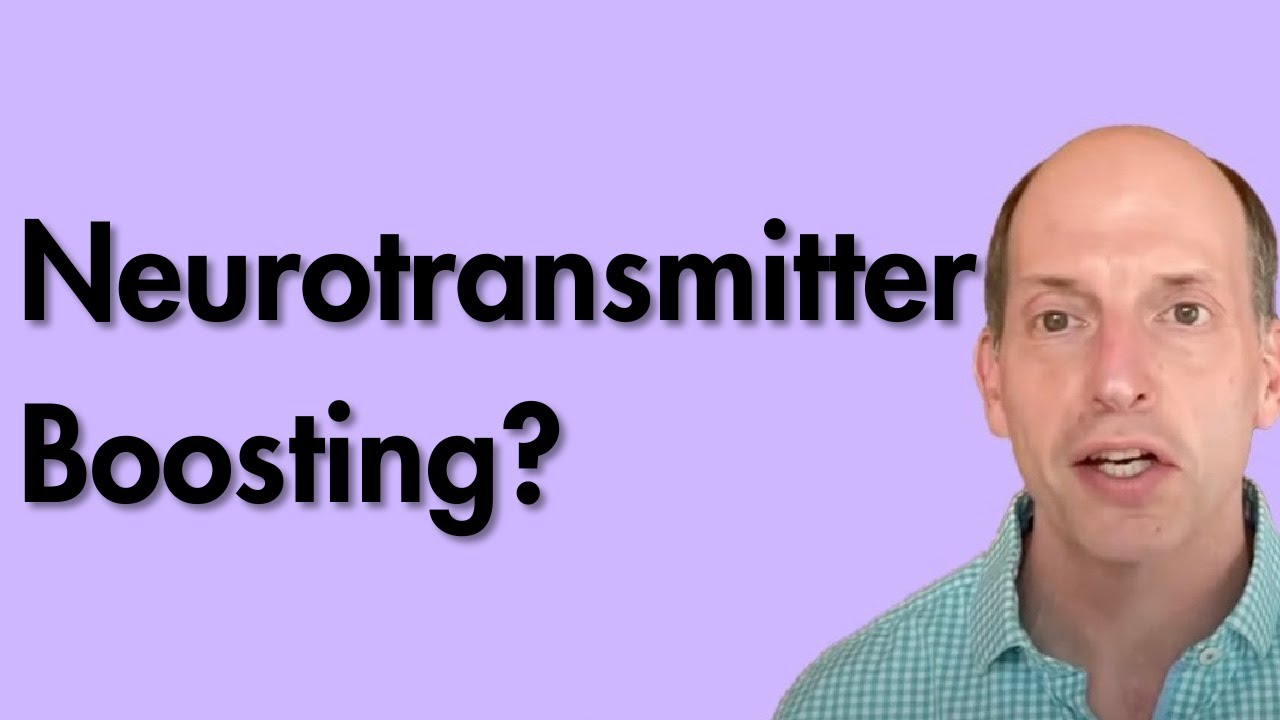
Boosting Neurotransmitters?
July 13, 2025
957
61
24
8.88%
Search the Record
IndexedEvery word spoken in this episode is indexed. Type any phrase to jump straight to the moment it was said.
Type any word or phrase that may have been spoken. Click a result to seek the player to that exact moment.
Try a name, a topic, or a quoted line
Dr John Kruse Episodes Around July 13, 2025
See what was published immediately before and after this episode.


 14:20Now Playing
Boosting Neurotransmitters?


Chapters
YouTube Description
as posted by the channelMain Chapters:
Preliminary experiments in the 1950's suggested that drugs that depleted the brain of specific neurotransmitters could mimic symptoms of schizophrenia or depression, and that medications that restored those levels could treat those conditions. This lead to monoamine theories of mental illness, where levels of dopamine, serotonin, and norepinephrine were investigated as causes of mental health conditions.
For decades this approach dominated psychiatric pharmacologic research, even though these three neurotransmitters are used by only a tiny percentage of neurons in the brain. However, they are powerful systems, modulating much of the rest of brain circuitry, and their small size and discrete distribution made them easier to study than broader systems like glutamate or acetylcholine.
One might think that the easiest way to boost levels of a neurotransmitter would be to eat more of it. But digestion, absorption, first pass effects in the liver, passage through the blood brain barrier, and arriving at the proper neural connections generally renders that approach ineffective for boosting a neurotransmitter.
Most of our drugs that do boost neurotransmitters do so not by making more of these chemicals, but by allowing them to act for a longer period of time, thus making a stronger downstream signal. Two basic strategies for lengthening the duration of a neurotransmitter's active life are to prevent it's reuptake into the neuron that released it (hence reuptake inhibitors, like Prozac, fluoxetine) or by preventing the breakdown of the neurotransmitter (hence monoamine oxidase inhibitors).
Reuptake inhibition is a major route for how some of the "stimulant" and "nonstimulant" medications (amphetamine, methylphenidate, atomoxetine, buproprion, duloxetine) boost dopamine and norepinephrine levels.
-----
Free link to my Medium Article on Boosting Neurotransmitters:
Follow on Medium for hundreds of full length articles on this subject and more!
Access to Full Medium articles requires paid membership.
-----
Videos Mentioned:
Acetylcholine and ADHD:
Monoamine Oxidase Inhibitors and ADHD:
Full Chapter list:
-------------------------
Psychiatrist, neuroscientist, and author John Kruse, MD, PhD presents practical, actionable, well-researched information about treatment options that scientists and clinicians recommend for adult ADHD and other mental health conditions.
Subscribe if you're curious about how neuroatypical brains can optimize their functioning in our shared, and somewhat strange, world.
ADHD topics have a pink background, and those on more general mental health topics have a purple background. A small collection of Politics related videos have an orange background.
Dr. Kruse has posted videos in the "Videos", "Live", and "Shorts", sections of this channel.
You're welcome to email him with topics you want discussed or people you think he should interview.
drjohnkruse@gmail.com
#health #mentalhealth #neurotransmitter
Links & Promotions
Guests & Subjects Covered
Sentinel Indexing in Progress
Metadata and chapters are available. Claim extraction for this episode is pending.
All video content is delivered via YouTube embedded players in accordance with the YouTube Terms of Service. Sentinel provides research tools that promote discovery and accountability across political media.