Elan Show
@elanshowofficial·28.6K subscribers·316 videos
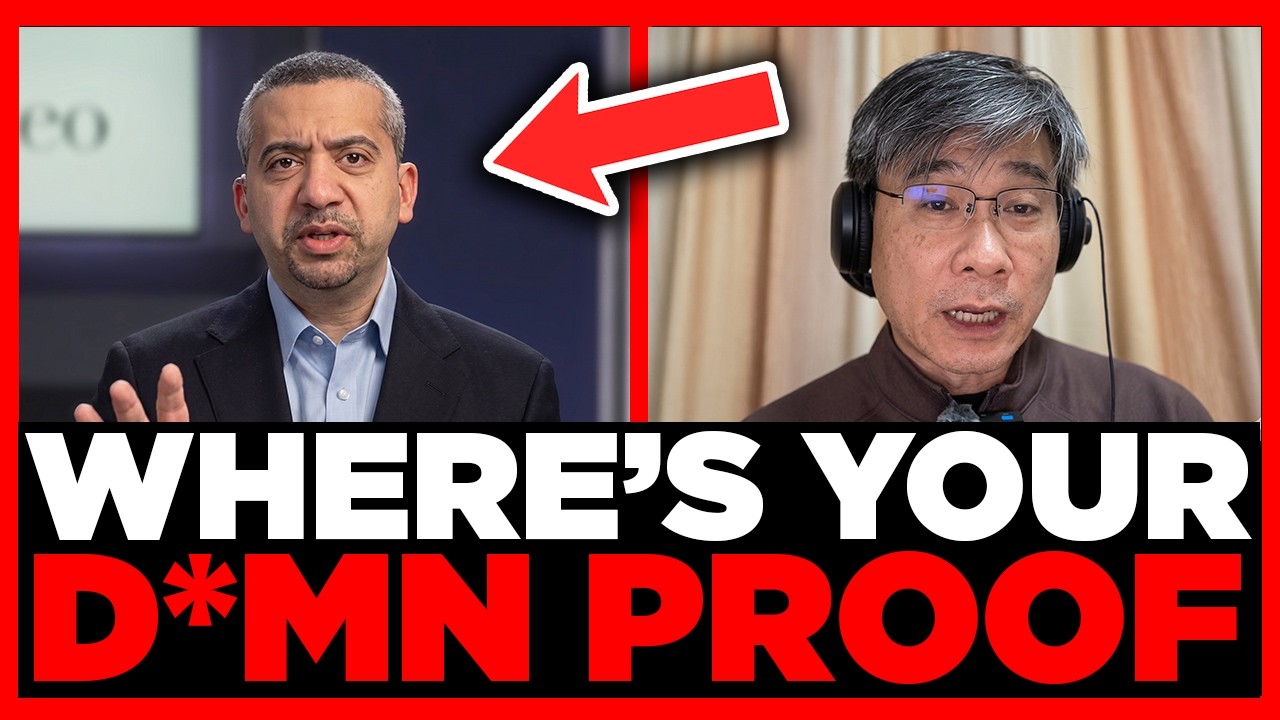
Mehdi Hasan TEARS APART Viral Conspiracy Pundit Who Says Education Has Too Many Facts
Posted
May 14, 2026
Views
2,237
Likes
73
Comments
21
Engagement
May 14, 2026
2,237
73
21
4.20%
Every word spoken in this episode is indexed. Type any phrase to jump straight to the moment it was said.
Type any word or phrase that may have been spoken. Click a result to seek the player to that exact moment.
Try a name, a topic, or a quoted line
 19:24Now Playing
This interview featuring Shwin Jang, often referred to online as “China’s Nostradamus,” is one of the most fascinating and controversial conversations in recent political and cultural discourse. In this wide-ranging discussion, the interviewer challenges Jang on his viral rise, his predictive claims about global events, and the deeper questions surrounding his credibility, methods, and worldview.
Shwin Jang, a Chinese-Canadian educator who gained attention for his geopolitical predictions, presents what he calls “predictive history”—a framework combining game theory, historical patterns, and philosophical analysis to forecast future events. While this approach has attracted a large online audience, it also raises serious questions. The interviewer presses Jang on whether his ideas are grounded in evidence or if they lean too heavily on speculation and interpretation.
A central tension in the debate revolves around credibility and authority. Jang openly acknowledges that he is not a professor despite branding himself as “Professor Jang” online. This sparks a broader discussion about how titles, credentials, and perceived expertise influence public trust—especially on platforms like YouTube where audiences may assume academic authority. The conversation highlights a growing issue in modern media: how to evaluate information when influencers blend education, opinion, and entertainment.
Another key topic is information control and global communication. Jang explains how he accesses Western platforms despite restrictions in his country, using VPN technology to bypass barriers. This leads to a deeper exchange about censorship, digital borders, and whether influential voices operating across systems can unintentionally serve larger political narratives. Jang himself admits it’s possible that powerful entities could be amplifying his content—an unusually candid moment that adds complexity to the discussion.
The debate takes a sharper turn when Jang introduces controversial ideas about secret societies, power structures, and global influence. Referencing groups like the Illuminati, Freemasons, and Jesuits, he argues that traditional education focuses too much on facts and not enough on “truth” or deeper pattern recognition. The interviewer strongly challenges this, emphasizing the importance of verifiable evidence and questioning whether speculative analysis can cross into misinformation.
This exchange becomes a broader philosophical clash: facts vs interpretation, evidence vs narrative, rigor vs imagination. Jang argues that truth involves understanding patterns beyond what can be immediately proven, while the interviewer insists that without factual grounding, claims lose credibility. This tension reflects a wider cultural debate seen across political commentary, independent media, and online education spaces.
The conversation also touches on ideology and political identity. Jang describes his own views as anti-war, pro–free speech, and supportive of wealth redistribution—positions often associated with progressive or anti-establishment perspectives. However, the interviewer points out that some of his language and frameworks overlap with ideas commonly found in more extreme online spaces. This raises an important question: how do certain narratives evolve, and how can similar concerns lead to very different ideological conclusions?
Ultimately, this interview is not just about one individual—it’s about how information spreads in the digital age, how audiences interpret authority, and how easily the line between analysis and speculation can blur. It challenges viewers to think critically about sources, claims, and the frameworks used to understand global events.
Join the discussion in the comments:
Do you think predictive analysis has value without hard evidence?
How should audiences evaluate credibility on platforms like YouTube?
Where is the line between open-minded thinking and misinformation?
If you found this breakdown insightful, be sure to like, share, and subscribe for more deep dives into political debates, media analysis, and cultural conversations shaping today’s world.
Sentinel Indexing in Progress
Metadata and chapters are available. Claim extraction for this episode is pending.
All video content is delivered via YouTube embedded players in accordance with the YouTube Terms of Service. Sentinel provides research tools that promote discovery and accountability across political media.