Elan Show
@elanshowofficial·28.6K subscribers·316 videos
Alex O'Connor DISMANTLES Christian Apologist's Defense With One Savage Question
Posted
May 20, 2026
Views
3,520
Likes
55
Comments
12
Engagement
1.90%
May 20, 2026
3,520
55
12
1.90%
Every word spoken in this episode is indexed. Type any phrase to jump straight to the moment it was said.
Type any word or phrase that may have been spoken. Click a result to seek the player to that exact moment.
Try a name, a topic, or a quoted line
 14:59Now Playing
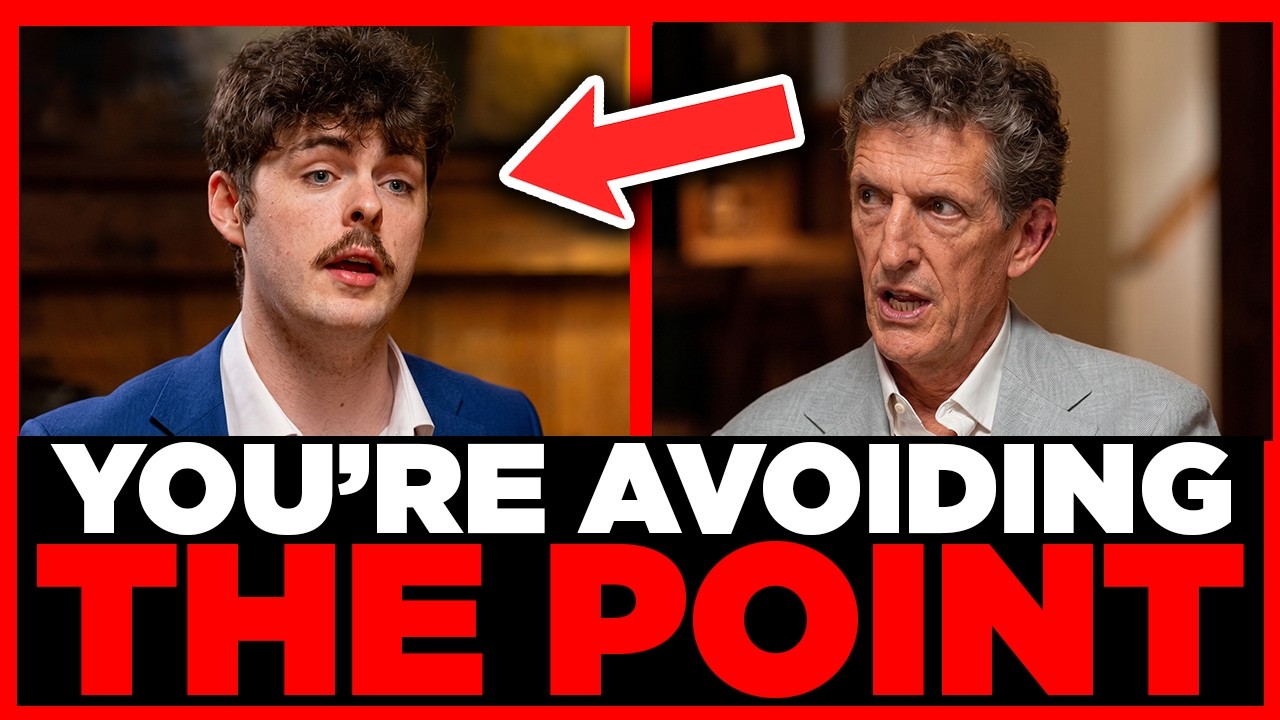
This debate starts with a simple question about slavery in the Bible and ends with one of the sharpest logical traps I’ve seen in a religious discussion in a long time. Alex O’Connor sits down with Christian apologist Cliff Knechtle and the conversation immediately dives into one of the hardest topics for modern Christianity to answer honestly: does the Bible actually condone slavery, or is it simply regulating an imperfect society?
At first, Cliff argues that God was not endorsing slavery, only regulating it because humanity lived in a fallen world. He compares it to divorce laws in the Old Testament, saying God permitted certain things because people’s hearts were hardened. But Alex refuses to stay in the abstract. Instead, he walks directly through the actual laws in Exodus and points out something deeply uncomfortable.
The Bible explicitly says that if a master beats his slave and the slave survives for a few days, the master is not to be punished because the slave is considered his property. That is not metaphorical language. That is legal language. And Alex asks the obvious question that almost nobody in these debates wants to sit with: if God truly opposed slavery, why are the laws written in a way that protects the slave owner instead of the enslaved person?
Then the debate gets even more intense.
Alex brings up the law about Hebrew slaves being freed after seven years. Sounds compassionate at first, until you get to the part where the slave’s wife and children remain the property of the master. The man can only stay with his family if he agrees to become a slave for life. Alex points out how strange that is for a God who supposedly values family, covenant, and marriage above all else. Why not simply free the family together?
That is where the conversation completely shifts.
Trying to defend the broader biblical message, Cliff quotes Galatians 3:28: “There is neither Jew nor Greek, slave nor free, male nor female, for you are all one in Christ.” Cliff argues this proves Christianity ultimately opposed slavery. But Alex instantly notices the problem with using that verse selectively.
Because the exact same verse also says there is no male and female.
And Alex delivers one of the most devastating lines of the entire discussion:
“I didn’t know that you were also a woke gender abolitionist.”
That moment changes everything. Because Alex is not mocking Christianity there. He is exposing a contradiction in the argument itself. If the verse abolishes slavery as an earthly category, then by the exact same logic it also abolishes gender distinctions. And if Christians do not interpret the verse that way regarding gender, then why suddenly interpret it literally regarding slavery?
That is the trap.
Alex calmly forces the logic to its natural conclusion and shows how selectively people often use scripture to support conclusions they already hold. No shouting. No insults. Just pure logical consistency applied in real time.
Whether you agree with Alex or Cliff, this conversation is fascinating because it strips away the easy talking points and forces both sides to deal directly with what the text actually says. And honestly, once the Galatians argument lands, the entire debate feels different.
Watch all the way through because the final section is where the conversation becomes impossible to ignore.
Sentinel Indexing in Progress
Metadata and chapters are available. Claim extraction for this episode is pending.
All video content is delivered via YouTube embedded players in accordance with the YouTube Terms of Service. Sentinel provides research tools that promote discovery and accountability across political media.