Elan Show
@elanshowofficial·28.6K subscribers·316 videos
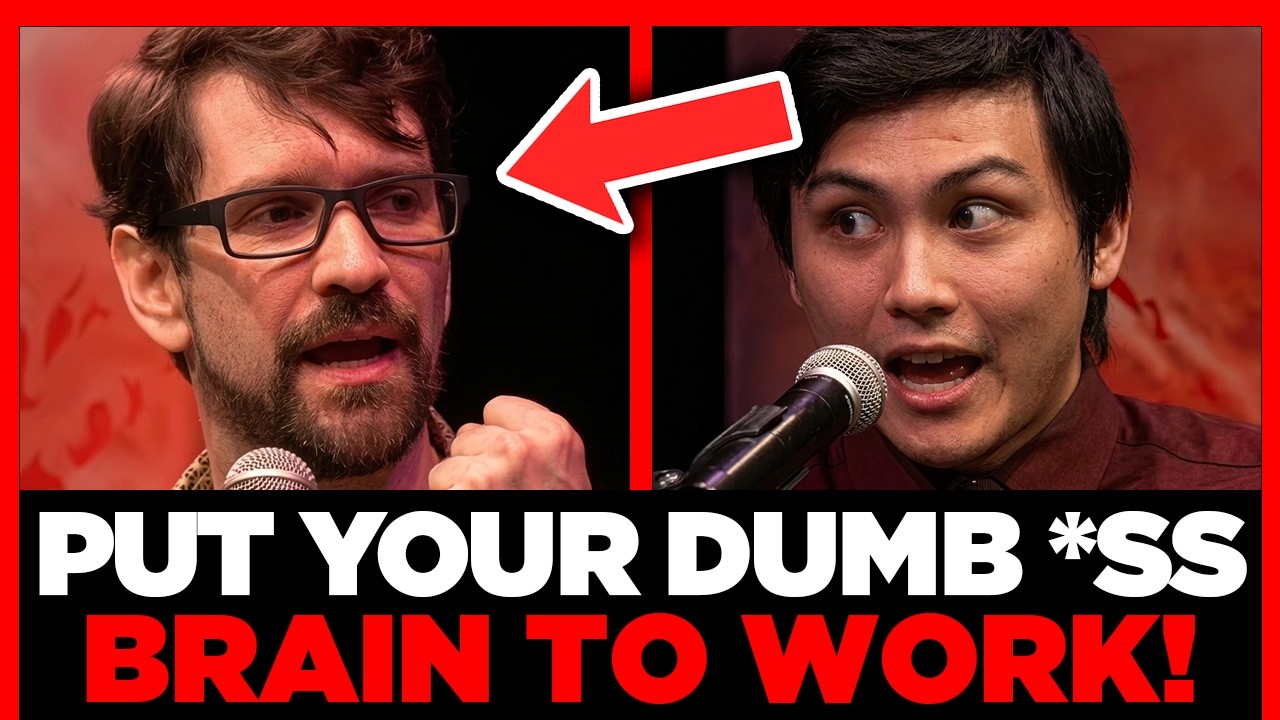
Destiny EDUCATES MAGA Supporter on Democracy in America LIVE on Stage
Posted
August 12, 2026
Views
5,630
Likes
136
Comments
38
Engagement
3.09%
August 12, 2026
5,630
136
38
3.09%
Every word spoken in this episode is indexed. Type any phrase to jump straight to the moment it was said.
Type any word or phrase that may have been spoken. Click a result to seek the player to that exact moment.
Try a name, a topic, or a quoted line
 17:03Now Playing
In this deep-dive political discussion, popular streamer and debate host Destiny engages in a nuanced, high-stakes dialogue regarding the root causes of political polarization, the rise of modern conservative populism, and the growing cultural crisis of meaning in American society. The conversation explores a critical question facing modern democracy: Why do voters in prosperous nations feel disconnected from political institutions, and how should liberal democracy respond to populist movements that operate outside traditional political norms?
Material Conditions vs. The Narrative Crisis
A central theme of this debate centers on why material prosperity alone fails to satisfy the electorate. While post-industrial economies have achieved historically high purchasing power and material security, many citizens report a profound lack of cultural fulfillment and existential purpose. The caller in this discussion argues that traditional political establishments, particularly on the center-left, have overly prioritized material outcomes—such as employment, housing, and consumer affordability—while failing to provide a compelling, unifying national story. Without a strong narrative framework to help individuals navigate a hyper-connected, information-saturated digital world, voters often gravitate toward populist figures, talk radio personalities, and online influencers who offer clear, ideological frameworks and a sense of shared identity.
Governance vs. Media Influence and Messaging
Destiny offers a counter-analysis, highlighting a fundamental asymmetry in modern politics: the gap between governance and media messaging. While one political faction focuses heavily on institutional policy, administration, and regulatory management, the opposing side has dedicated decades to building a powerful media ecosystem centered on rhetoric, emotional resonance, and audience engagement. With the explosion of the internet, social media platforms, and podcasting, political leaders increasingly operate as digital influencers rather than traditional lawmakers. This dynamic raises crucial questions about whether modern political discourse favors viral engagement over substantive policy outcomes.
The Limits of Liberalism and Political Compromise
The discussion then shifts toward the philosophy of classical liberalism and the feasibility of political compromise. The caller posits that moderation requires working directly with populist movements to mitigate social disruption. However, Destiny dismantles this premise by examining the foundational requirements of liberal democracy. Liberalism relies on a shared commitment to basic rules—including the rule of law, the separation of powers, judicial independence, and constitutional guardrails. When a political actor or movement systematically rejects these foundational boundaries, negotiating within the established framework becomes mathematically impossible. The debate examines whether attempting to appease anti-institutional figures ultimately undermines democratic governance.
Academia, Cultural Institutions, and Accountability
Finally, the participants debate the role of higher education and intellectual institutions in guiding public thought. The conversation addresses arguments surrounding prominent public intellectuals, such as Jordan Peterson, and whether academia has failed to equip the public with a vocabulary to address modern alienation. Destiny highlights the paradox of blaming academic institutions for a lack of narrative leadership while political movements actively seek to defund, penalize, and overhaul educational curricula.
Join the Discussion
What drives political polarization in modern society? Is democracy capable of bridging the gap between material policy and cultural narrative? We want to hear your perspective in the comments below. Share your thoughts on governance, political messaging, and the future of democratic debate. Remember to keep the discussion respectful and constructive.
Sentinel Indexing in Progress
Metadata and chapters are available. Claim extraction for this episode is pending.
All video content is delivered via YouTube embedded players in accordance with the YouTube Terms of Service. Sentinel provides research tools that promote discovery and accountability across political media.