Big Think
@bigthink·8.8M subscribers·10.1K videos
Are Girls Discouraged From Creativity? | Maria Schneider | Big Think
Posted
April 24, 2012
Views
233
Likes
5
Comments
3
Engagement
3.43%
April 24, 2012
233
5
3
3.43%
Every word spoken in this episode is indexed. Type any phrase to jump straight to the moment it was said.
Type any word or phrase that may have been spoken. Click a result to seek the player to that exact moment.
Try a name, a topic, or a quoted line
You’re on April 24, 2012. Earlier episodes are to the left, later ones to the right — the row keeps loading as you go. Click any card to open it.
 Apr 24, 20125:40Now Playing
Are Girls Discouraged From Creativity?
New videos DAILY
Join Big Think Edge for exclusive videos
----------------------------------------------------------------------------------
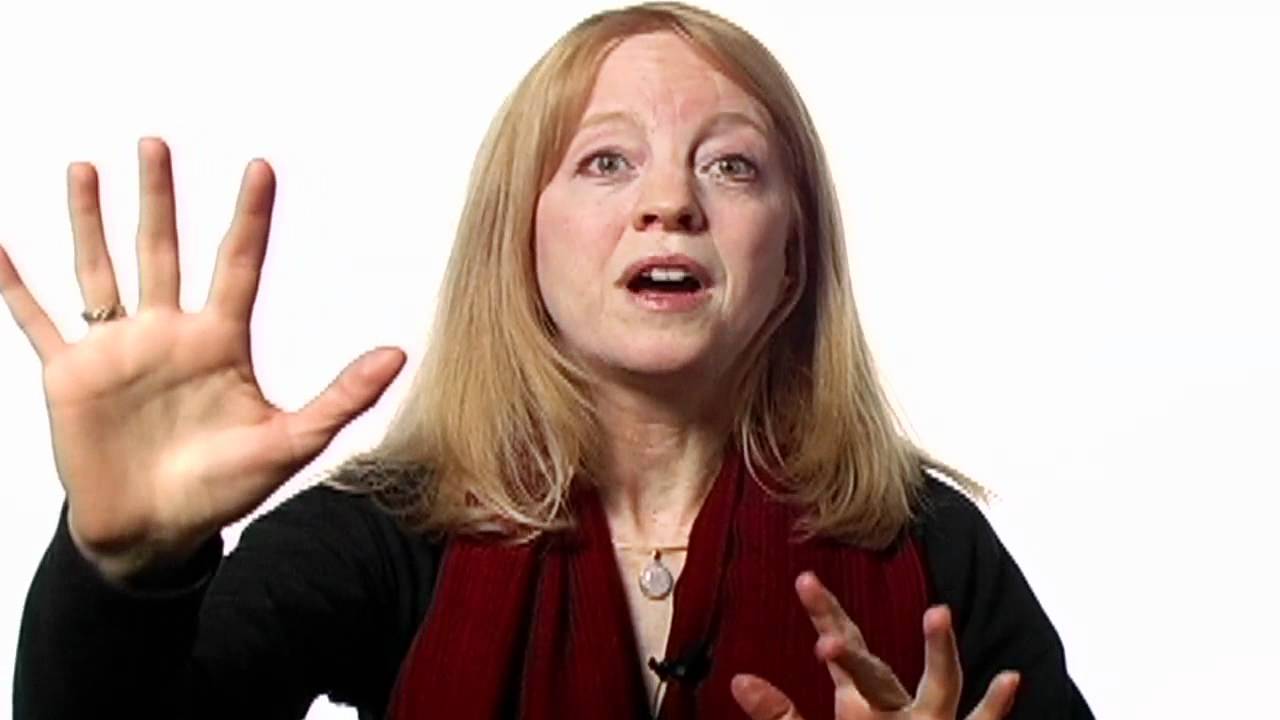
Once the composer recognized the gender imbalance in the jazz world, she developed a theory about why women are discouraged from the arts.
----------------------------------------------------------------------------------
Maria Schneider:
Maria Schneider is a Grammy Award-winning American composer. Born in Windom, Minnesota, she became widely known through the orchestra she founded in 1992. They appeared at Visiones in Greenwich Village every Monday night for a stretch of five years. The Maria Schneider Orchestra has since performed at festivals and concert halls worldwide, and she herself has received numerous commissions and guest-conducting invites, working with over 80 groups from over 20 countries.
Schneider's debut recording, Evanescence, was nominated for two 1995 Grammy Awards. Her most recent recordings have brought two Grammy Awards, the first for 'Concert in the Garden' (Best Large Ensemble Album; the first record to win a Grammy with Internet-only sales) and the second for 'Cerulean Skies' (Best Instrumental Composition). Schneider's most recent work, 'Carlos Drummond de Andrade Stories,' was commissioned by the Saint Paul Chamber Orchestra for soprano Dawn Upshaw. She is currently working on a piece commissioned by the Kronos Quartet for a 2010 premier.
----------------------------------------------------------------------------------
TRANSCRIPT:
Question: Did you encounter any gender-specific obstacles as a female composer?
Maria Schneider: No, I think for me, you know, it's funny, I never even asked myself about that until I was first asked by a journalist and it was when I, after I made my first record, so I was already, I think 32 years old before I really even thought about that. And then I had to go back and think, wait a minute, I was the only girl doing this in college and writing for big band. I mean, it wasn't just composition, it was jazz composition, which is maybe even more male, you know, dominated, or whatever you want to say, or peopled with men or something. And I think the reason was because my first mentor was a woman. And in my home town, my sister, I had two sisters, one was an artist and her mentor, who was a really wonderful painter in Wyndham, was a woman. And I think I kind of, my very first feeling was that women are the artistic ones and that men are the more practical ones. Even in my family, my mother was the one who loved art and music, so I just kind of was oblivious to the fact that when I went out in the real world that it was all men. It's like, "Oh, well, it's a lot of men around here, whatever." You know, and I just kept going. So I'm glad I never felt any complexity about it. I did, I will say I was conscious when I was first writing in New York for some of the groups in New York that were all men. I remember saying to my teacher, Bob Brookmeyer, that, you know, I didn't want my music to sound too feminine, I really wanted to be able to have it really sound male. So I was conscious of, you know, a lot of people would scream and say, "What does that mean?" You know, and get upset at me. But I was a little bit self-conscious that my music was too feminine and he said, "Listen, you are what you are and you should just embrace that." And he even went so far as to say, "You know, this music has been so dominated by men that if there's something through your music that is female, if you can even make that judgment, we need it, because it hasn't been represented very much."
Question: Is music becoming less male-dominated?
Maria Schneider: Yeah. Well, I do, because I mean, jazz came up, you know, when jazz came up, the way it was passed on was, you know, people playing jam sessions or playing in clubs late at night and in that era, what were women doing who were in their 20's, they were raising families and how many women would've, back then, made the choice to, instead of having a family and raising kids and being married and everything, to have the life of a jazz musician, hanging out in clubs late at night, a lot of drinking and, you know, drugs maybe, and who knows what? And just hanging out all night and playing. So I think it wasn't, at that time, culturally, you know, what it meant to be a jazz musician was very different than what it means to be one now.
Read the full transcript at
Sentinel Indexing in Progress
Metadata and chapters are available. Claim extraction for this episode is pending.
All video content is delivered via YouTube embedded players in accordance with the YouTube Terms of Service. Sentinel provides research tools that promote discovery and accountability across political media.