Big Think
@bigthink·8.8M subscribers·10.1K videos
What's Mexico's Best Hope for Growth? | Jorge Castañeda | Big Think
Posted
April 24, 2012
Views
987
Likes
20
Comments
2
Engagement
2.23%
April 24, 2012
987
20
2
2.23%
Every word spoken in this episode is indexed. Type any phrase to jump straight to the moment it was said.
Type any word or phrase that may have been spoken. Click a result to seek the player to that exact moment.
Try a name, a topic, or a quoted line
You’re on April 24, 2012. Earlier episodes are to the left, later ones to the right — the row keeps loading as you go. Click any card to open it.
 Apr 24, 20124:00Now Playing
What's Mexico's Best Hope for Growth?
New videos DAILY
Join Big Think Edge for exclusive videos
----------------------------------------------------------------------------------
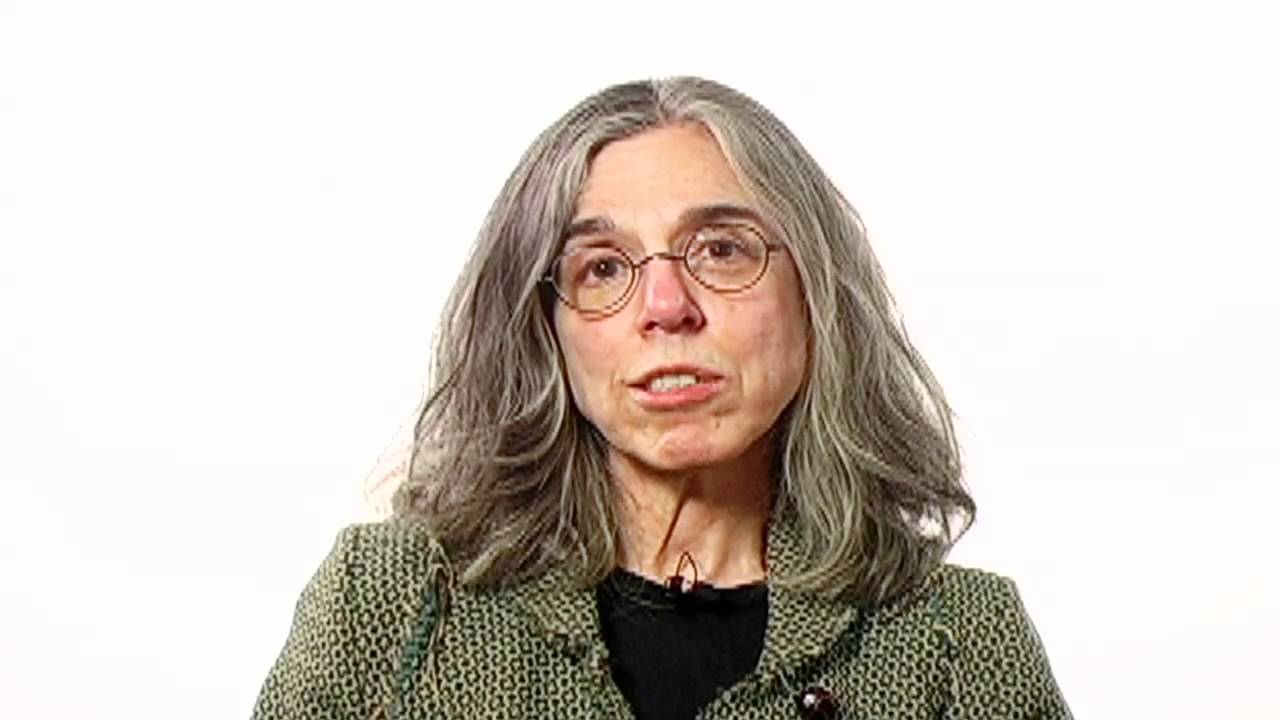
NAFTA was “oversold,” says Mexico’s former secretary of foreign affairs. The country can only revive its economy by fundamentally altering its neighbors’ thinking.
----------------------------------------------------------------------------------
Jorge Castañeda:
Jorge Castañeda is Global Distinguished Professor of Politics and Latin American and Caribbean Studies at New York University. A renowned public intellectual, political scientist, and prolific writer, with an interest in Latin American politics, comparative politics and U.S.-Latin American relations, he is the former Foreign Minister of Mexico (2000-2003), and in that position he focused on diverse issues in U.S.-Mexican relations, including migration, trade, security, and narcotics control; joint diplomatic initiatives on the part of Latin American nations; and the promotion of Mexican economic and trade relations globally.
Born in Mexico City in 1953, Dr. Castañeda received undergraduate degrees from both Princeton University and Universite de Paris-I (Pantheon-Sorbonne), an M.A. from Ecole Pratique de Hautes Etudes, Paris I, and his Ph.D. in the History of Economics from the University of Paris. He was a Senior Associate at the Carnegie Endowment for International Peace (1985-87) and a John D. and Catherine T. MacArthur Foundation Research and Writing Grant Recipient (1989-1991). Among his many books are "Utopia Unarmed: The Latin American Left after the Cold War" (1993), "The Mexican Shock" (1995), "Compañero: The Life and Death of Che Guevara" (1997), and "Perpetuating Power: How Mexican Presidents Were Chosen" (2000). Dr. Castañeda is a regular columnist for the Mexican daily Reforma, The Los Angeles Times, and Newsweek International.
----------------------------------------------------------------------------------
TRANSCRIPT:
Question: Has NAFTA been beneficial or harmful to Mexico’s economy?
Jorge Castañeda: Well, NAFTA was oversold from the very beginning. It was oversold by its advocates as being the sort of the silver bullet that would solve Mexican underdevelopment and it was oversold by its critics who - you remember Ross Perot’s huge sucking sound that millions of jobs would flow from the United States to Mexico. I wish they had. That’s exactly what we need. But, that didn’t happen. So, it was oversold from the very beginning and consequently it’s easy right now to blame NAFTA or to praise NAFTA for Mexico’s ills or for Mexico’s successes.
In fact, I have the feeling it hasn’t done that much harm. This notion that millions of peasants were driven off the land by NAFTA is false. Peasants in Mexico have been being driven off the land for decades now and, as a matter of fact, there should be fewer peasants in Mexico today then there are with or without NAFTA. Mexico is a country who where by GDP per capita it should have far few people working in agriculture than it does.
Conversely, it has not done the country that much good either. The Mexican economy has only grown an average of around 3 percent per year, a little bit less, since 1994 when NAFTA came into law which is really not very impressive and it’s way below what was expected of NAFTA. So, I think too much has been made of the whole thing. As it stands, it’s okay, but it’s not such a big deal.
Question: How can Mexico raise its standard of living over the long term?
Jorge Castañeda: Well, there's a lot things that it has to do. Has to do things on energy, on the rule of law, on tourism, on all sorts of things. But, at the end of the day, the one most important thing that it has to do is to convince itself and the United States and Canada that Mexican economic development and prosperity is the number one issue on the US and on the Canadian agenda with Mexico. That the number one issue is not drugs; the number one issue is immigration only indirectly. The number one issue is not the environment, etc. The number one is how the United States and Canada with Mexico can drag Mexico up by its bootstraps and turn it into a more prosperous country.
This is not something that outrageous for the United States. It’s what the United States did with Puerto Rico in the 1940’s. It’s, of course, what it did with Western Europe through the Marshall Plan. It’s what it did with Japan and Taiwan during the 50’s and 60’s. It’s what the Western European countries, the rich northern Western European countries like France and Germany and Britain, did with the poorer countries like Ireland or Spain or Portugal or Greece or now with Poland.
Read the full transcript at
Sentinel Indexing in Progress
Metadata and chapters are available. Claim extraction for this episode is pending.
All video content is delivered via YouTube embedded players in accordance with the YouTube Terms of Service. Sentinel provides research tools that promote discovery and accountability across political media.