Big Think
@bigthink·8.8M subscribers·10.1K videos
Big Think Interview With Jonathan Metzl | Big Think
Posted
April 24, 2012
Views
2,666
Likes
27
Comments
2
Engagement
1.09%
April 24, 2012
2,666
27
2
1.09%
Every word spoken in this episode is indexed. Type any phrase to jump straight to the moment it was said.
Type any word or phrase that may have been spoken. Click a result to seek the player to that exact moment.
Try a name, a topic, or a quoted line
You’re on April 24, 2012. Earlier episodes are to the left, later ones to the right — the row keeps loading as you go. Click any card to open it.
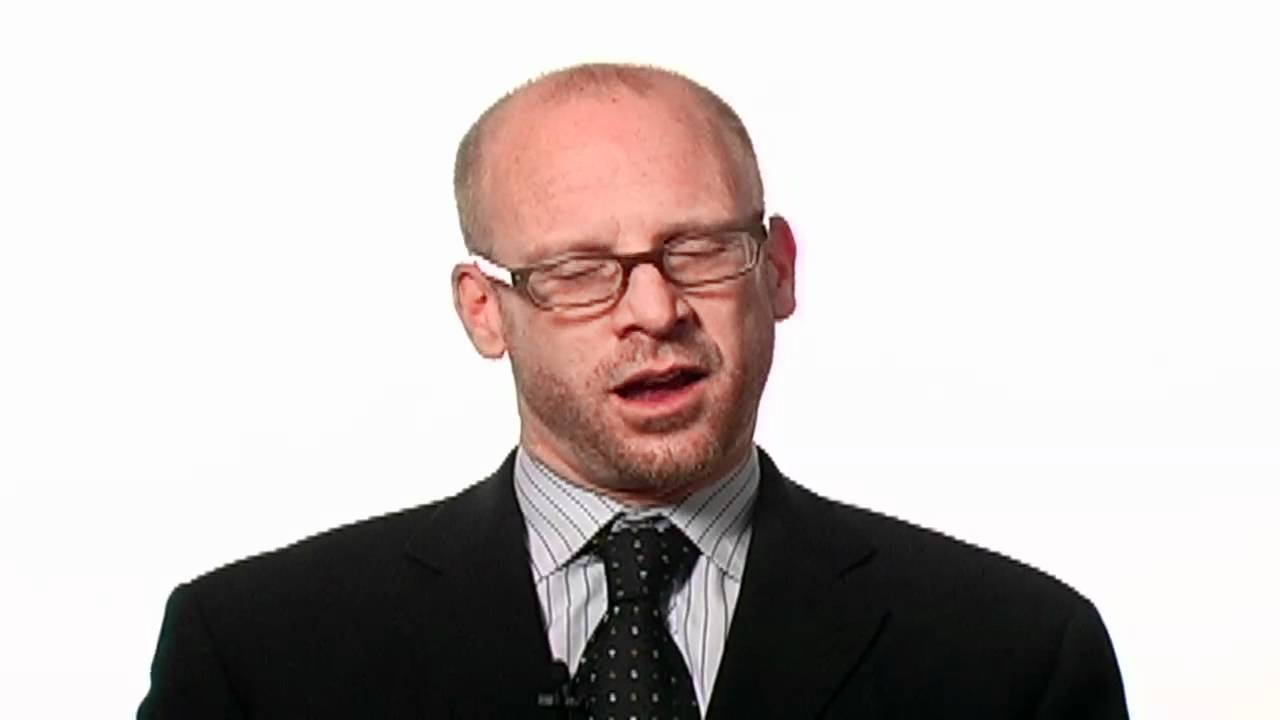 Apr 24, 201224:23Now Playing
Big Think Interview With Jonathan Metzl
New videos DAILY
Join Big Think Edge for exclusive videos
----------------------------------------------------------------------------------
A conversation with the Associate Professor of Psychiatry and Women’s Studies at the University of Michigan.
----------------------------------------------------------------------------------
Jonathan M. Metzl:
Jonathan M. Metzl, MD, PhD, is a psychiatrist who also has a Ph.D. in American Studies. He is Associate Professor of Psychiatry and Women's Studies and Director of Program in Culture, Health, and Medicine at the University of Michigan. In this capacity he works as a Senior Attending Physician in the adult psychiatric clinics and teaches courses in the areas of history of psychiatry, gender, and health at the undergraduate and graduate levels. He is the author of "Prozac on the Couch: Prescribing Gender in the Era of Wonder Drugs" (Duke University Press, 2003), and of "The Protest Psychosis: How Schizophrenia Became a Black Disease" (Beacon Press, 2010).
----------------------------------------------------------------------------------
TRANSCRIPT:
Jonathan Metzl: Jonathan Metzl. I’m Associate Professor of Psychiatry and Women’s Studies and director of the program in culture, health, and medicine at the University of Michigan.
Question: What does your daily work consist of?
Jonathan Metzl: Absolutely, yeah. So basically I have a split appointment at the University of Michigan. The majority of my time is spent teaching graduate and undergraduate courses on the history of psychiatry, the history of medicine, and also on gender and race politics in the United States. I also work as a psychiatrist at the university, so I also am an attending psychiatrist in the outpatient psychiatry clinic and I work in the psychiatric emergency room and other treatment sites.
Question: What is schizophrenia, and what is schizophrenia not?
Jonathan Metzl: So in terms of present day psychiatry, I mean, as you mentioned there have been changes with every new version of the DSM, the Diagnostic and Statistical Manual that have come out, that have sharpened our understanding of what schizophrenia is, and so in the present day we think of schizophrenia as an illness that the main symptoms are delusions, hallucinations, most hearing voices, sometimes seeing things, kind of losing touch with reality, also paranoia, feeling like people are out to get you and social withdrawal, what are called negative symptoms, so cognitive withdrawal, social withdrawal, so it’s a very debilitating, very serious mental illness, but as you mentioned this definition has changed over time and it’s also changed in relation to changing popular perceptions about how people with schizophrenia act.
Question: How was schizophrenia originally defined, and how has this definition changed over time?
Jonathan Metzl: Sure, so in my book that’s in part the story I tell, is how changing psychiatric definitions of schizophrenia and changing American cultural definitions of schizophrenia really have morphed in relation to each other over time and particularly in relation to histories about race in the United States, so one of the central narratives of the book is that in particularly the early 1920s, 1930s, 1940s when the idea of schizophrenia itself was first coming to the United States from Europe there was a general assumption that persons who suffered from schizophrenia were either shy or calm or they were geniuses. It was often represented as an illness that afflicted white novelists or poets and as I say, these were very often in popular and psychiatric representation assumed to be white people. Now this was a... you know a kind of gross generalization, but in part what was happening was that the illness itself was defined almost as a personality disorder, like a split personality, so it was taken up by psychoanalysts, used in psychoanalytic sessions and popular representation really picked that up. Two instances from this time period that I think are very important, one is a film that came out in 1948 called The Snake Pit, which was an Olivia de Havilland movie made from a book several years earlier of the same name and it really showed schizophrenia as being an illness that afflicted in particular white middle class women. Also when early versions of the Diagnostic Manual came out in the early 1950s it really was… It was called at that time schizophrenic reaction, and it was assumed to be mostly a personality condition.
Read the full transcript at
Sentinel Indexing in Progress
Metadata and chapters are available. Claim extraction for this episode is pending.
All video content is delivered via YouTube embedded players in accordance with the YouTube Terms of Service. Sentinel provides research tools that promote discovery and accountability across political media.