Oceanx
@oceanx·609K subscribers·610 videos
400 Million Years Old And Still Here | Filming Coelacanths in the Deep
Posted
March 20, 2026
Views
73,036
Likes
830
Comments
74
Engagement
1.24%
March 20, 2026
73,036
830
74
1.24%
Every word spoken in this episode is indexed. Type any phrase to jump straight to the moment it was said.
Type any word or phrase that may have been spoken. Click a result to seek the player to that exact moment.
Try a name, a topic, or a quoted line
 0:19Now Playing
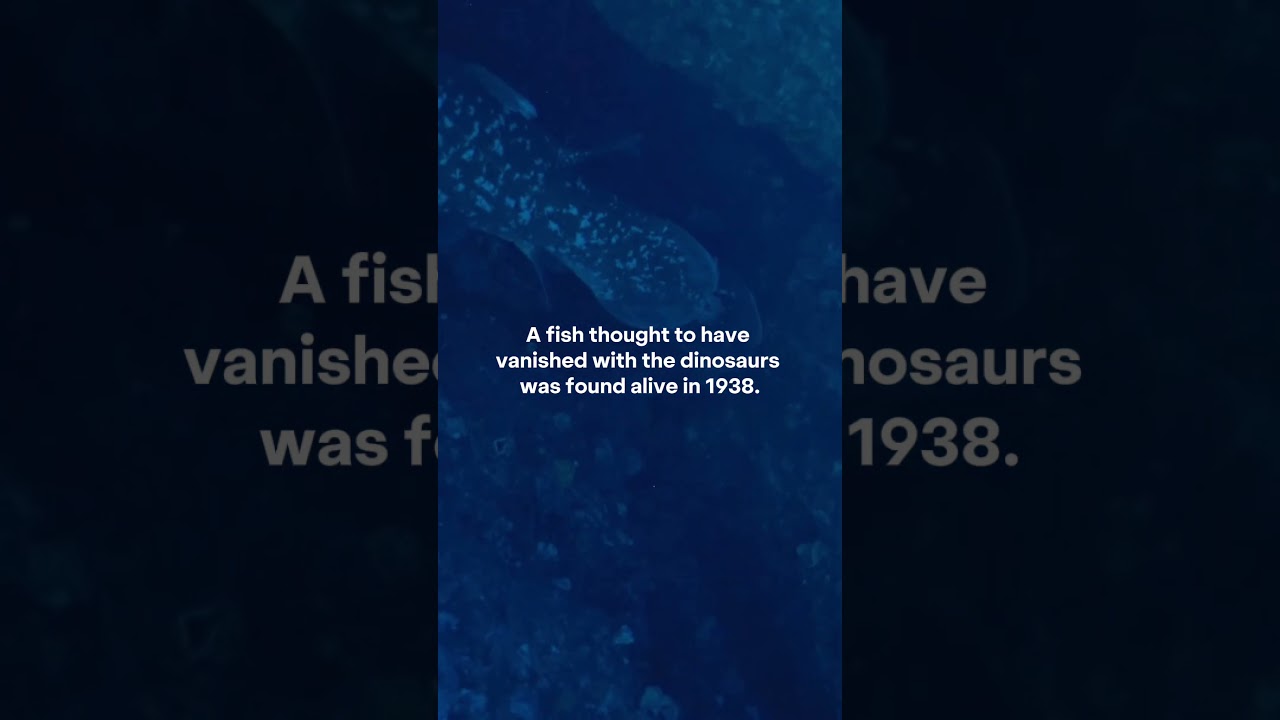
Coelacanths were thought to be extinct for 65 million years until one was rediscovered in 1938.
Their lineage stretches back more than 400 million years - over 170 million years before the first dinosaurs appeared! As rare living representatives of lobe-finned fishes, the type of fish that have stubby limb-like fins instead of the typical ray-like fins in fish like salmon or goldfish - they offer scientists insight into vertebrate evolution and the transition from fish to early four-limbed animals.
The green laser dots visible in this footage are measurement tools used by our submersible. They are spaced 10 centimeters apart and help scientists estimate the size of animals and features at depth. Because seawater and the acrylic dome of the sub can distort what we see underwater, these paired lasers provide an accurate scale. The lasers are designed specifically for scientific observation, and they do not harm the animals.
Coelacanths inhabit deep rocky reefs and occur at low densities across a limited geographic range, making encounters uncommon and documentation even rarer. Each confirmed observation helps refine what we know about their size, life stages, and behavior in the wild, helping us better protect them and their habitats.
Sentinel Indexing in Progress
Metadata and chapters are available. Claim extraction for this episode is pending.
All video content is delivered via YouTube embedded players in accordance with the YouTube Terms of Service. Sentinel provides research tools that promote discovery and accountability across political media.