Elan Show
@elanshowofficial·28.6K subscribers·316 videos
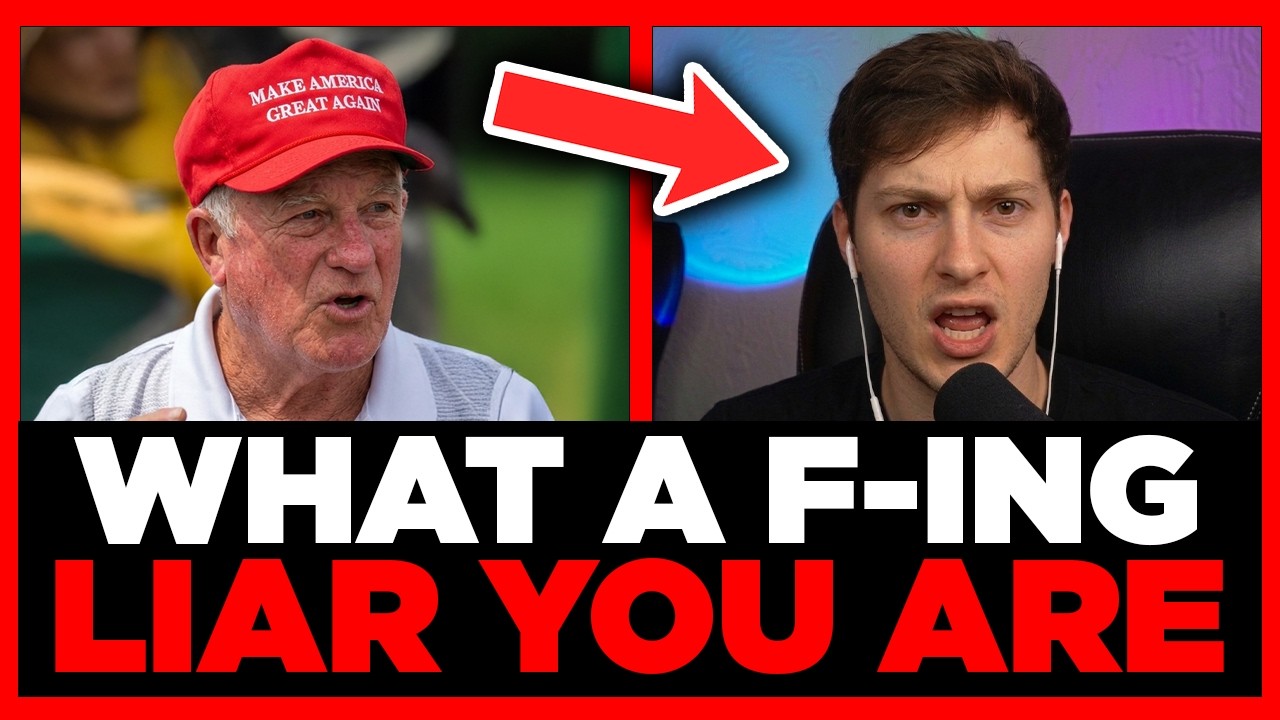
Progressive YouTuber ANNIHILATES MAGA Supporter Who Confused Executive Orders for Actual Laws
Posted
April 14, 2026
Views
1,784
Likes
38
Comments
8
Engagement
April 14, 2026
1,784
38
8
2.58%
Every word spoken in this episode is indexed. Type any phrase to jump straight to the moment it was said.
Type any word or phrase that may have been spoken. Click a result to seek the player to that exact moment.
Try a name, a topic, or a quoted line
 18:33Now Playing
This debate starts off as a standard political back-and-forth over legislation, policy, and the role of government—but quickly turns into something far more intense when the conversation shifts to the Epstein files and government transparency.
What makes this exchange so compelling is how it unfolds in real time. The liberal speaker comes prepared with specific examples, legislation, and historical context, while the Trump supporter tries to defend his position based on broader concerns about corruption, secrecy, and accountability. At first, the conversation focuses on policy—bipartisan bills, infrastructure, and the difference between executive orders and actual legislation.
And that’s where the first major crack appears.
When asked to name just one piece of Republican legislation over the last 60 years that overwhelmingly benefited everyday Americans over the ultra-wealthy, the Trump supporter struggles to respond. Instead, he turns to executive orders—only to be immediately corrected that executive orders are not legislation and can be easily overturned. This moment sets the tone for what comes next: a debate grounded in specifics versus one built on general impressions.
But the real turning point comes when the conversation shifts to the Epstein files.
The Trump supporter explains that one of his main reasons for supporting Trump was the promise of exposing government secrets and bringing accountability to a system he believes is deeply corrupt. He frames his vote as a calculated decision—choosing the candidate he believed would reveal hidden truths.
That’s when the liberal speaker delivers the key challenge.
If transparency and accountability were the goal, why weren’t the Epstein files fully released when the opportunity was there?
This is where the discussion becomes far more serious. The liberal lays out a timeline, arguing that by early 2025, the legal barriers had been resolved and the administration had the authority to release the information. Yet, according to the argument presented, that action never happened. Instead, there were delays, resistance, and even efforts to prevent further disclosure.
This creates a direct contradiction that’s difficult to ignore.
You can’t base your entire political decision on exposing corruption and then overlook the moment when that exposure could have actually happened. That tension becomes the emotional core of the debate.
To his credit, the Trump supporter doesn’t completely shut down. Instead, he shifts his argument—from defending results to defending intent. He emphasizes the belief that Trump represented the best chance for transparency, even if the outcome didn’t fully align with that expectation.
And that shift says everything.
Because at that point, the debate is no longer about policy or facts—it’s about belief, trust, and the gap between what politicians promise and what they actually deliver.
This conversation highlights a broader issue in modern politics: how easily people can attach their hopes to rhetoric, and how difficult it is to reconcile those hopes when reality doesn’t match the expectation.
Watch until the end to see how the debate unfolds—and decide for yourself who made the stronger case.
👇 Drop your thoughts in the comments and let me know where you’re watching from!
⭐️Fair Use Disclaimer:
This video may contain copyrighted material the use of which has not always been specifically authorized by the copyright owner. We are making such material available for purposes of criticism, comment, news reporting, teaching, scholarship, or research. We believe this constitutes a 'fair use' of any such copyrighted material as provided for in section 107 of the US Copyright Law.
Content Context: The videos on this channel may explore unverified information or theories gathered from public sources and media reports. They are intended for educational and informational purposes only and should not be interpreted as confirmed facts.
Intent: Elan Show does not seek to discredit or defame any individuals, organizations, or groups. The goal is to promote thoughtful dialogue and critical analysis.
Sentinel Indexing in Progress
Metadata and chapters are available. Claim extraction for this episode is pending.
All video content is delivered via YouTube embedded players in accordance with the YouTube Terms of Service. Sentinel provides research tools that promote discovery and accountability across political media.