Elan Show
@elanshowofficial·28.6K subscribers·316 videos
Young Progressive HUMILIATES MAGA Voter in BRUTAL Debate
Posted
April 15, 2026
Views
2,239
Likes
63
Comments
10
Engagement
3.26%
April 15, 2026
2,239
63
10
3.26%
Every word spoken in this episode is indexed. Type any phrase to jump straight to the moment it was said.
Type any word or phrase that may have been spoken. Click a result to seek the player to that exact moment.
Try a name, a topic, or a quoted line
 18:26Now Playing
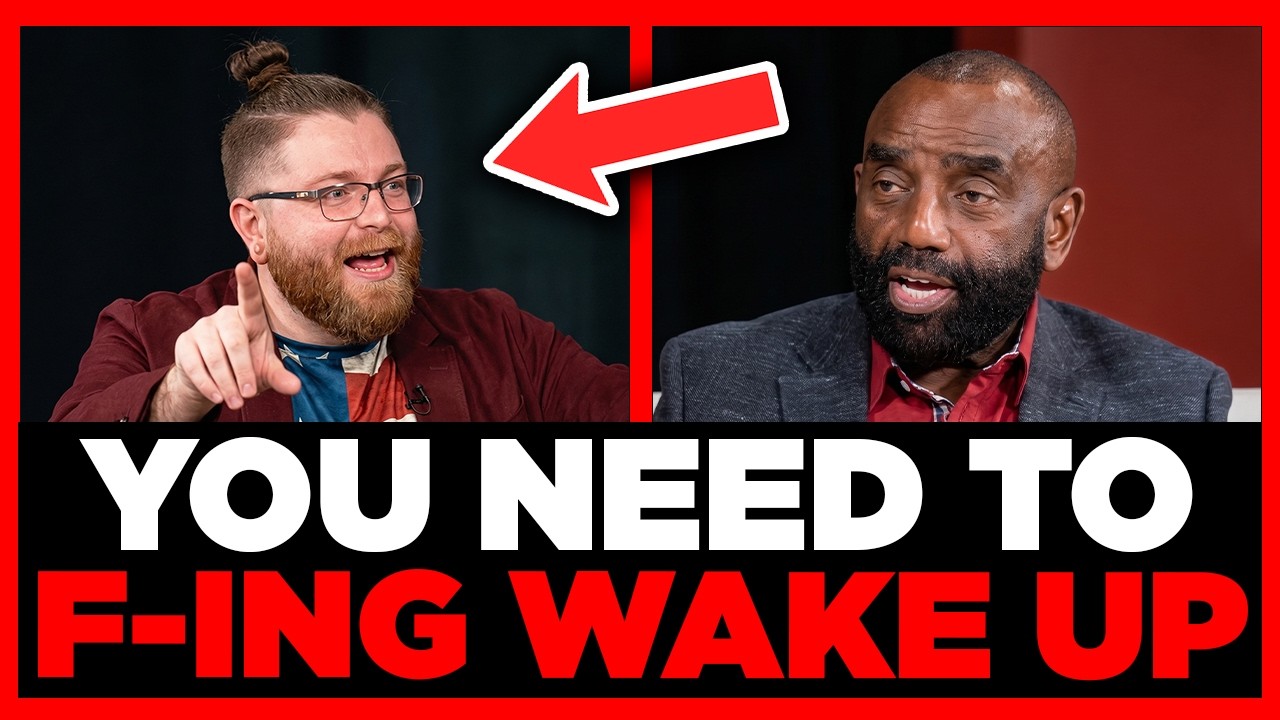
This video breaks down a street interview between a political commentator and a 23-year-old blue-collar voter who openly admits that his political support is driven more by personal financial experience than ideological alignment. What begins as a discussion about wages, overtime pay, and household expenses quickly evolves into a deeper debate about economic policy, media narratives, and the role of personal perception in shaping political decisions.
At the center of the conversation is a disagreement over whether recent economic changes have improved or worsened conditions for working-class Americans. The voter initially argues that he has seen increased take-home income and improved affordability in areas such as food and overtime pay. The interviewer challenges this perspective by introducing broader economic indicators, including tariff impacts, inflation trends, wage growth data, and manufacturing investment shifts, suggesting that individual financial improvements may not reflect national economic patterns.
A major theme of the discussion is how economic policy is interpreted at the individual level versus the national level. The interviewer explains how tariffs often function as indirect consumer costs, arguing that price increases in everyday goods may offset perceived gains in income. This creates a tension between personal experience and aggregated economic data, raising questions about how voters evaluate policy effectiveness.
The conversation then transitions into social and cultural issues, particularly around public safety concerns, identity-based fears, and perceptions of risk. The voter explains that part of his political motivation is rooted in concerns about safety in spaces such as public restrooms, especially in relation to his young daughter. The interviewer challenges this reasoning by asking whether these concerns are based on personal experience or broader narratives, introducing statistical data and historical comparisons to show how similar fears have appeared in previous political and social debates.
As the dialogue continues, the interviewer shifts toward consistency in moral reasoning, questioning whether the voter applies the same standards across different groups and situations. This leads to a broader discussion about how political opinions are often shaped by selective perception, where certain risks are emphasized while others are minimized depending on ideological framing.
A key moment in the video occurs when the interviewer uses a structured line of questioning to examine contradictions in the voter’s reasoning. By comparing hypothetical scenarios involving trust, responsibility, and public safety, the interviewer highlights inconsistencies between the voter’s stated concerns and his conclusions. This leads to a moment of reflection where the voter acknowledges uncertainty in his position, illustrating how guided questioning can expose gaps in intuitive political reasoning.
Throughout the video, the interviewer also references public statements, legal controversies, and policy discussions to challenge assumptions about leadership, accountability, and credibility. These references are used not as isolated claims, but as part of a broader effort to examine how voters weigh character, policy outcomes, and personal benefit when making political decisions.
The conversation ultimately highlights a central question in modern political discourse: whether voters prioritize lived personal experience or broader structural data when forming opinions. It also raises important considerations about how narratives around safety, economics, and identity are constructed and reinforced through media and interpersonal discussion.
By the end of the interview, the voter is confronted with a logical inconsistency in his reasoning regarding trust, authority, and personal safety. This moment underscores the power of structured questioning in debate formats, where conclusions emerge not through confrontation, but through step-by-step examination of a participant’s own stated beliefs.
This video encourages viewers to think critically about how they form political opinions, how personal experience interacts with statistical reality, and how easily narratives can shape perception. Viewers are invited to share their perspectives in the comments: Do personal financial gains outweigh broader economic data when evaluating policy? How much should personal safety concerns influence political decisions? And how do we balance emotional reasoning with factual consistency in public debate?
Sentinel Indexing in Progress
Metadata and chapters are available. Claim extraction for this episode is pending.
All video content is delivered via YouTube embedded players in accordance with the YouTube Terms of Service. Sentinel provides research tools that promote discovery and accountability across political media.