Elan Show
@elanshowofficial·28.6K subscribers·316 videos
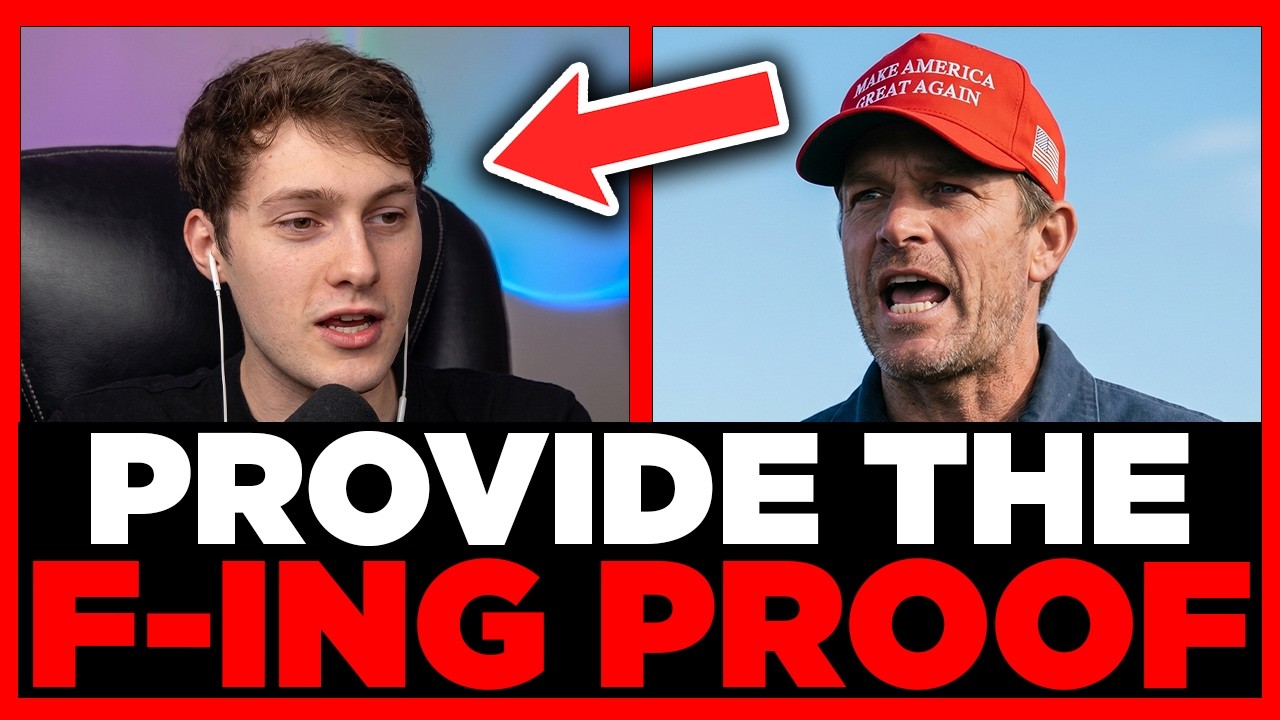
MAGA Caller STUTTERS as Brian Shapiro Forces Him to Apply His Own Standard Against Himself
Posted
April 19, 2026
Views
2,496
Likes
62
Comments
8
Engagement
April 19, 2026
2,496
62
8
2.80%
Every word spoken in this episode is indexed. Type any phrase to jump straight to the moment it was said.
Type any word or phrase that may have been spoken. Click a result to seek the player to that exact moment.
Try a name, a topic, or a quoted line
 17:38Now Playing
A live radio call-in debate takes a sharp turn in this episode as a listener named David confronts the host over a controversial moment involving lawmakers not standing during a high-profile speech honoring a crime victim. What begins as a question about political respect quickly escalates into a deeper argument about media narratives, selective outrage, and how political messaging shapes public perception.
The host pushes back immediately, challenging the assumption behind David’s question and pointing out that the original story being discussed contained factual inaccuracies about the background of the case. From there, the conversation becomes a back-and-forth over whether emotional reactions should take priority over verified information, and whether political symbolism is being used to advance a broader narrative.
As the discussion intensifies, the host draws attention to patterns in David’s arguments, questioning why certain types of victims and crimes consistently receive his focus while others do not. This leads to a broader examination of selective concern in political commentary and how bias can appear through repetition, even when the speaker believes they are being objective.
Ty Cobb, former White House counsel, is referenced during the broader discussion as part of ongoing concerns about executive power, loyalty-based governance, and institutional trust. His commentary on internal government dynamics and legal challenges adds another layer to the conversation, shifting the debate from a single call-in dispute to wider questions about political accountability and the limits of authority within federal institutions.
The host also highlights past moments involving public political figures such as Marjorie Taylor Greene and Lauren Boebert, comparing reactions across different administrations and questioning whether standards of “respect” are applied consistently depending on political affiliation.
As tensions rise, the exchange becomes less about one speech and more about how political outrage is formed, who it is directed at, and whether consistency exists in how people respond to public events. The host argues that emotional reactions are often shaped by narrative framing rather than equal application of principles, while David maintains that his concern is rooted in honoring victims and condemning political exploitation of tragedies.
By the end of the call, the discussion shifts toward electoral impact and whether moments like these actually influence undecided voters. The host suggests that symbolic disagreements, such as standing or sitting during speeches, rarely change political outcomes, despite generating intense online debate and media attention.
This episode raises important questions about political consistency, media framing, selective outrage, and the role of emotion in public discourse. It challenges viewers to consider whether their reactions are guided by principle or by perspective, and whether political conversations are becoming more about performance than substance.
What do you think—was this about respect for a victim, or about how political narratives are constructed in real time? Share your thoughts in the comments and join the discussion.
Sentinel Indexing in Progress
Metadata and chapters are available. Claim extraction for this episode is pending.
All video content is delivered via YouTube embedded players in accordance with the YouTube Terms of Service. Sentinel provides research tools that promote discovery and accountability across political media.