Study Politics
@studypolitics·26.9K subscribers·199 videos
1965 War in Urdu/Hindi
Posted
September 7, 2019
Views
8,605
Likes
161
Comments
28
Engagement
2.20%
September 7, 2019
8,605
161
28
2.20%
Every word spoken in this episode is indexed. Type any phrase to jump straight to the moment it was said.
Type any word or phrase that may have been spoken. Click a result to seek the player to that exact moment.
Try a name, a topic, or a quoted line
 26:12Now Playing
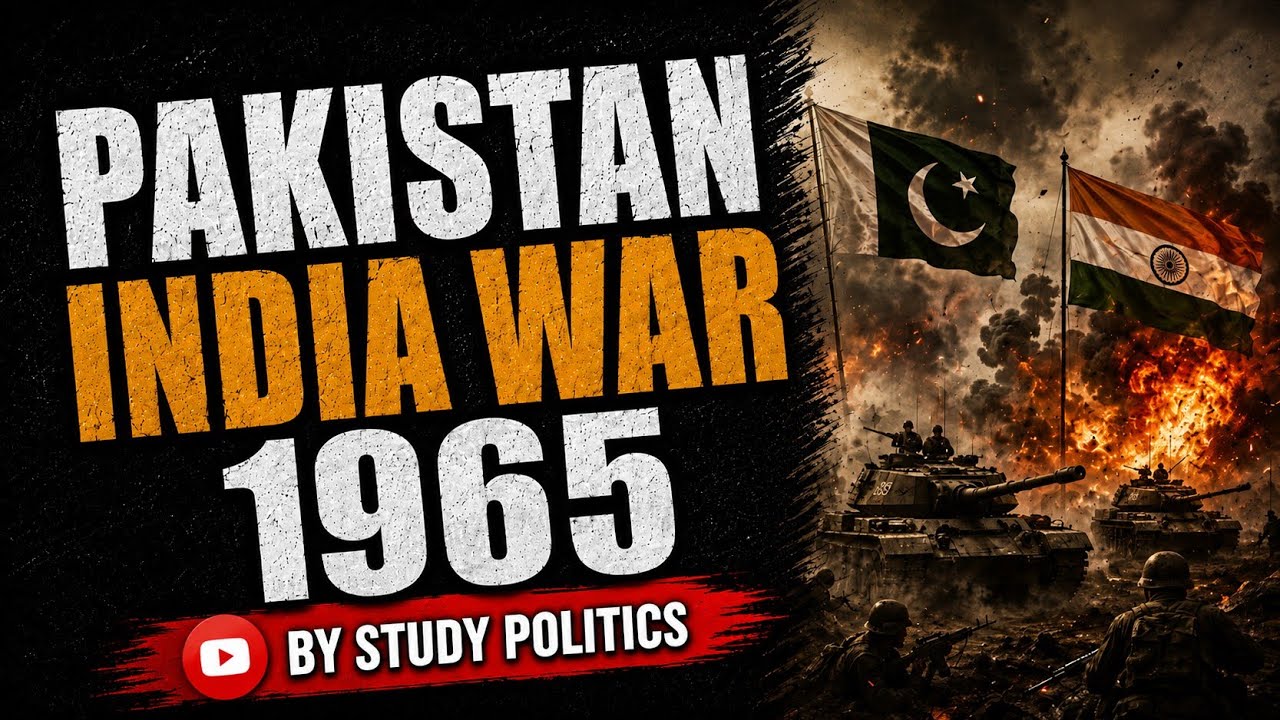
The 1965 war was fought between India and Pakistan in the months of April and September of 1965. Mostly it consisted of skirmishes especially at the Rann of Kutch. The war started after the “Operation Gibraltar” which was initiated to liberate Kashmir. The 1965 war lasted for 17 days and as a result, there were thousands of casualties on both sides. Much of the war was fought by land forces. In the end, India had the upper hand over Pakistan when Tashkent Agreement was signed. Both Pakistan and India felt betrayed by their western allies.
“Operation Gibraltar” was the main cause of the 1965 war. In this operation, Pakistan tried to infiltrate its forces, labeled as Kashmiri locals to bring an insurgency in the Kashmir valley, which will, in the end, resulted in the liberation of Kashmir. Many in Pakistan saw this a miscalculated plan and many were not sure of its applicability. The operation was failed because there was no insurgency in Kashmir. On 5 August 1964, some infiltrate crossed the ceasefire line dressed as locals. Pakistan made progress in some key areas of Indian Occupied Kashmir. India as captured Haji Pir Pass in Pakistan Occupied Kashmir. Both Pakistan and India lost their tanks and men when they started counter-attack to liberate their respective areas. On 6 September 1965 which is known as the defense day in Pakistan, India launched an attack on Pakistani Punjab to capture Lahore. Pakistani forces fought well and the Indian army suffered high casualties here. There was also a fight at Rajasthan. When the war was over, India was in a better position than Pakistan. Pakistan lost 3,800 soldiers, India lost some 3,000. Both India and Pakistan held each other territory. Pakistan’s air force did extremely well in the war. There were also some covert operations by Pakistan. with the help of the USSR and the USA, the Tashkent agreement was signed. At that time Lal Bahadur Shastri was the Prime Minister of India and Ayub Khan was the president of Pakistan. there was some intelligence failure on both sides. India used its 14% of ammunition compared to Pakistan’s 80%. In the end, India had twice the number of tanks than Pakistan had. There was poor coordination between the India Air Force and the Indian army. On the other hand, Pakistan has failed to mobilize Kashmiris, did not expect an attack on the southern side of the country. After the war, both India and Pakistan felt the betrayal of their western allies. India established close relations with USSR and Pakistan with China. East Pakistan was not happy as there was not enough military to protect them. There was a high flow of money from east to west Pakistan to finance the war.
Sentinel Indexing in Progress
Metadata and chapters are available. Claim extraction for this episode is pending.
All video content is delivered via YouTube embedded players in accordance with the YouTube Terms of Service. Sentinel provides research tools that promote discovery and accountability across political media.
To watch more videos you can click on the following links:
Vietnam War
SovietAfghan War
Suez Canal Crisis
Kashmir Issue
United Nations Organization
To Subscribe my Chanel you can click on the following link:
Study Politics is an educational Channel. The purpose of this channel is to provide information about different topics related to History, International relations, Political Science, Sociology, Current Affairs, and other Social Sciences. The students of competitive exams like CSS, PMS, PPSC, PCS, ISP, UPSC and others will find this channel extremely beneficial because of its simplified material and nature of its content. Besides some specific students, the other people belong to other fields other than social sciences can also find this channel useful. It will provide them day-to-day news with the explanation.
You can also like my Facebook page, can follow me on Twitter and on Linkedin.
#StudyPolitics #1965_war #Ayub_Khan #Lal_Bahadur_Shastri