Elan Show
@elanshowofficial·28.6K subscribers·316 videos
Destiny DESTROYED MAGA Defender LIVE USING His Own MAGA Ideology
Posted
April 27, 2026
Views
5,329
Likes
89
Comments
26
Engagement
2.16%
April 27, 2026
5,329
89
26
2.16%
Every word spoken in this episode is indexed. Type any phrase to jump straight to the moment it was said.
Type any word or phrase that may have been spoken. Click a result to seek the player to that exact moment.
Try a name, a topic, or a quoted line
 17:19Now Playing
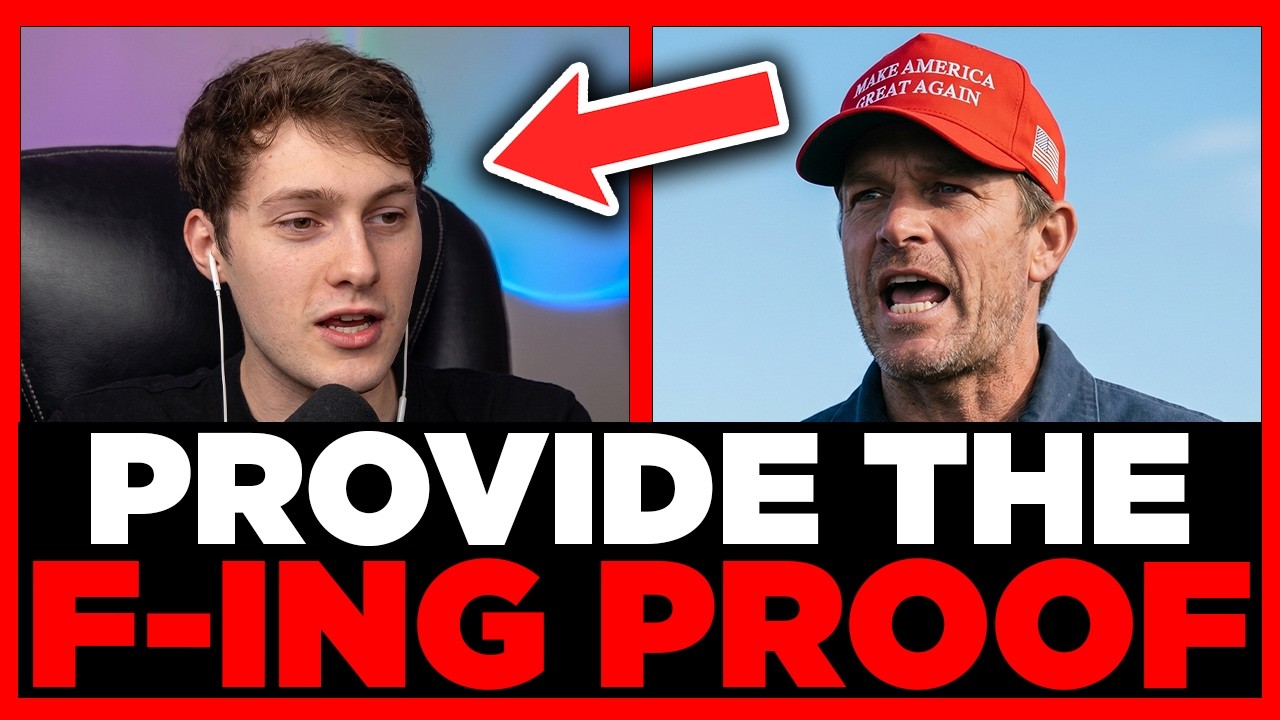
This debate between Steven and Jake dives deep into one of the most important economic questions of our time: can free markets alone drive innovation, or does government intervention play a necessary role in shaping the future? What starts as a discussion about green energy quickly evolves into a broader clash over Austrian economics, subsidies, protectionism, and the real-world limits of ideology.
Steven argues from a pragmatic standpoint, emphasizing that industries like energy, infrastructure, and advanced manufacturing often require massive upfront investment, long timelines, and coordinated public support. He makes the case that without government subsidies or strategic investment, many critical sectors—especially green energy—would struggle to develop at the pace needed to remain globally competitive. His position reflects a growing view in modern political economy: that strategic industries cannot always rely on pure market forces.
On the other side, Jake defends a more traditional free market perspective rooted in Austrian economics. He argues that subsidies distort markets, misallocate resources, and create inefficiencies that ripple across the economy. According to Jake, when governments attempt to “pick winners,” they often end up redistributing wealth in ways that ultimately harm long-term growth. His argument centers on the belief that private actors, driven by profit incentives, are better equipped to determine the most efficient use of capital.
One of the key flashpoints in the debate is the question of global competition. Steven points out that other countries are heavily investing in emerging industries like renewable energy and advanced technology, raising the concern that refusing to participate in this strategy could leave nations dependent on foreign production. Jake counters by maintaining that even if other countries subsidize their industries, it does not justify adopting the same approach domestically.
However, the conversation takes a critical turn when this principle is tested against real-world scenarios. Jake acknowledges that he supports other countries subsidizing industries if it results in cheaper goods for consumers—while opposing similar strategies at home. This moment highlights a deeper contradiction and becomes one of the most discussed points of the entire exchange.
The debate also touches on tariffs, taxation, and the role of protectionist policies. Steven challenges Jake to reconcile his free market stance with policies that involve heavy government intervention, such as tariffs or direct economic control measures. This leads to a broader discussion about consistency in political and economic beliefs, and whether ideology can hold up when applied to complex, real-world systems.
Beyond economics, this conversation reflects a wider ideological divide seen across political commentary and online debates. It raises questions about how principles translate into policy, how nations compete in a globalized economy, and whether theoretical frameworks can adapt to modern challenges.
This is not just a debate about markets—it’s about strategy, power, and the future of economic development.
Join the discussion in the comments:
Do you think free markets alone can drive innovation in industries like energy?
Should governments invest in strategic sectors to stay competitive globally?
Where do you draw the line between necessary intervention and overreach?
If you found this debate insightful, don’t forget to like, share, and subscribe for more breakdowns of major political and economic discussions.
Sentinel Indexing in Progress
Metadata and chapters are available. Claim extraction for this episode is pending.
All video content is delivered via YouTube embedded players in accordance with the YouTube Terms of Service. Sentinel provides research tools that promote discovery and accountability across political media.